AUTHOR BIO: Eric Barton is editor of The Adventurist and a freelance journalist who has reviewed restaurants for more than two decades. Email him here.

Every city has a few small restaurants that feel like secrets the food-obsessed share at low volume. Then the spotlight hits, and the place changes. The staff puts on airs, the food gets fussier, as if attention is a substitute for discipline.
Cotoa has taken the opposite path. A year after opening in North Miami—and after becoming the only Ecuadorian restaurant in the United States to land in the Michelin Guide—it feels more grounded. The cooking is still ambitious, as if chef Alejandra Espinoza is only just getting started.
That is the reason I went back on Saturday. I wrote about Cotoa when it first arrived, when it still felt like a new chapter and a small gamble. A year later, with Michelin validation and the kind of reputation that usually warps a restaurant’s personality, I wanted to confirm the obvious question: did the attention improve it, or ruin it?
It improved it. Cotoa is still one of the best restaurants in Miami.

Chef Alejandra Espinoza
Before this address, Espinoza built an audience at a downtown Miami food hall, where she could test-drive a focused Ecuadorian menu that helped her create what became Cotoa.

Cotoa North Miami
The space is charming and simple, almost like a breakfast spot that stays open late. The tables and chairs are honey-colored, the dining area is cozy, and the main show is watching the staff move fast in the open kitchen, turning out plates with the kind of rhythm that only comes from repetition and seriousness.
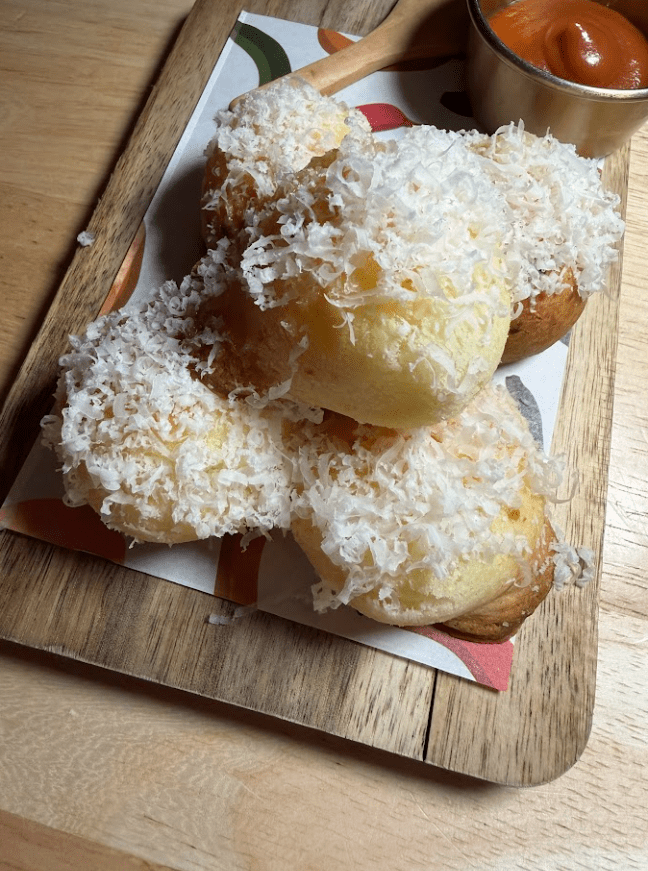
We started with a bottle of tempranillo from the short wine list; it was minerally and restrained, which made sense with food that leans into brightness, acidity, and heat instead of trying to bludgeon the table with richness. The cassava muchines set the tone immediately: cheesy yuca with enough pull to make the first bite feel like a small reward. The mame butter was a rich, slightly sweet condiment that I wanted to put it on toast the next morning.
Cassava muchines
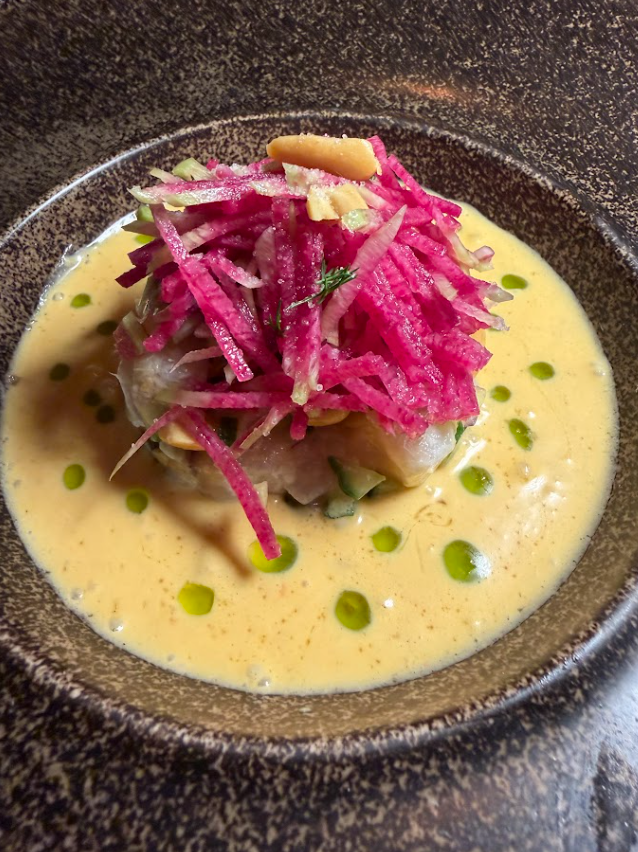
Then came the mahi ceviche, piled high over a peanut-coconut sauce that became the star of the table. The sauce had depth and sweetness and a roasted nuttiness that made the fish feel almost secondary. We scraped the last of it with spoons, which is always the best review a plate can get.
Mahi ceviche

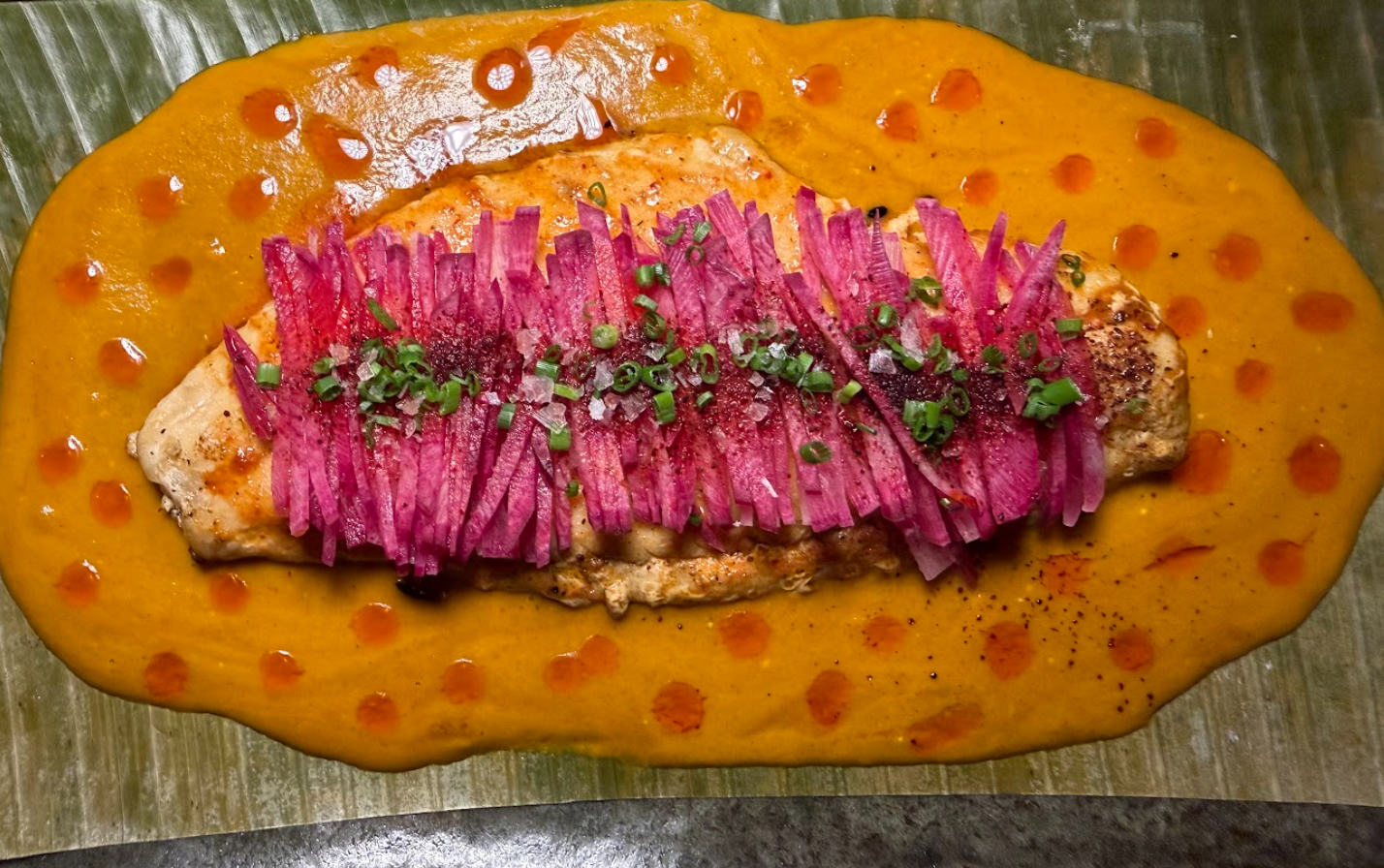
Snapper encocado
My snapper arrived with a cousin of the ceviche’s sauce—still peanut and coconut, but pushed in a different direction with turmeric and sumac. The side of ginger rice came studded with sweet plantain chunks, which did the job that great sides always do: it made sure nothing on the plate went to waste, especially not that sauce. Every forkful felt engineered to keep the flavors in balance, and to keep the table chasing the last bite.

Tortellinis con seco de pollo
My wife ordered the tortellinis with a tomato-forward chicken stew, crispy cheese slices, and bits of avocado, and it was the kind of dish that makes sharing feel necessary, not polite. It had real momentum: savory and tangy, then richer, then bright again when the avocado landed, with the crispy cheese adding a salty edge that kept pulling the fork back in. It tasted like a dish that took time to get right, and then refused to be toned down for anybody.

Pineapple, coconut, Amazonian vanilla ice cream
A year in, this is what is most impressive about Cotoa: it does not cook like it is trying to live up to the Michelin Guide. It cooks like it is trying to live up to the vision Espinoza had right from the beginning.
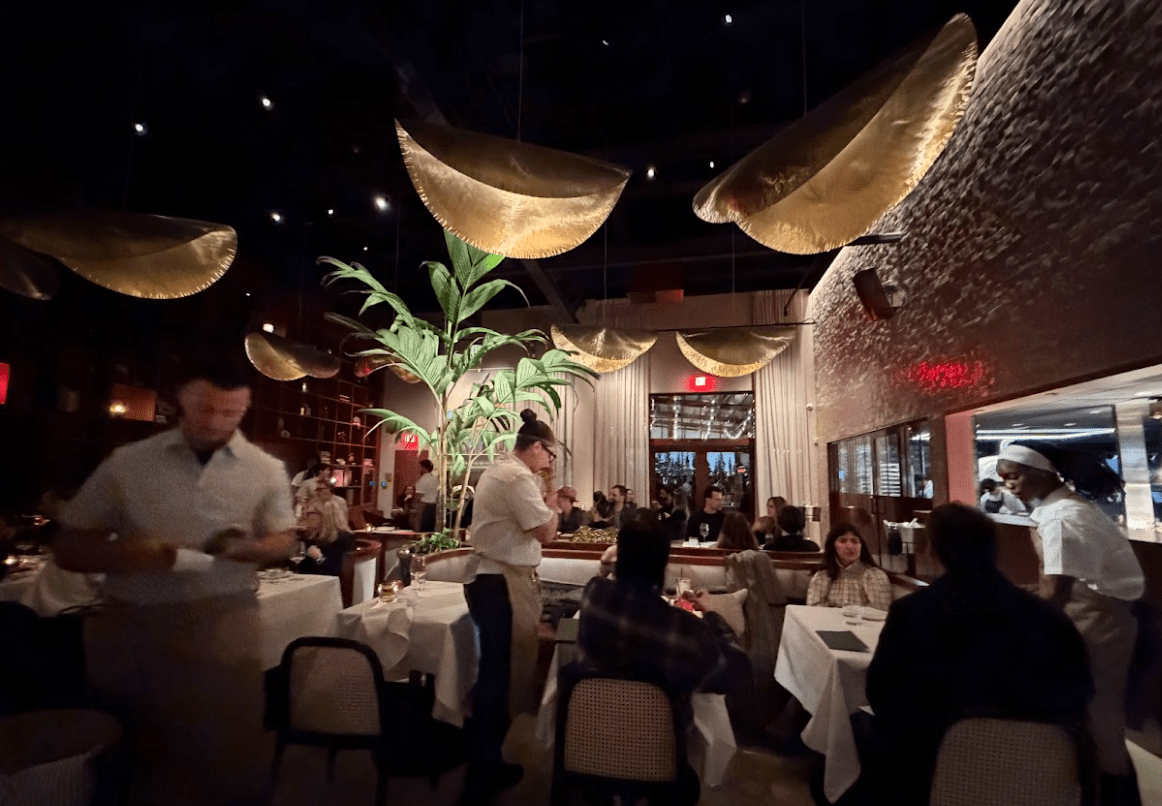
Review: Miami’s Favorite Dinner Party Moves to Little River
Fooq’s reopened in Little River with a dazzling new space, a DJ lounge upstairs, and a menu that still hits like home.
The Best Belize Restaurants for Fry Jacks, Pibil, and Beachfront Seafood
A road trip across Belize—from Guatemala’s western border to sandy islands—led to these restaurants worth planning around.