CITY GUIDES | KENTUCKY
Mike Dew Is Rewriting the Rules of Cincinnati Pizza
At Wayfarer Tavern in Dayton, Kentucky, his square-cut pies borrow from Detroit, tavern-style, and a lifetime of pizza obsession.
By Rebecca Thompson | July 20, 2026
AUTHOR BIO: Rebecca Thompson has held many jobs, from newspaper writer to middle-school teacher. As a restaurant critic, she’s reviewed the Michelin-starred to gas station BBQ.

The pizza that sent Mike Dew searching for pans, brick cheese, and eventually a restaurant began outside a bar in Austin.
It was 2011, and Dew was on a trip with his brother when a friend took them to Violet Crown Social Club. Outside was a little trailer called Via 313, serving Detroit-style pizza at a time when it was rare to find those square pies outside the Motor City. “There was no pizza like that anywhere around me,” Dew says. “When I got home, I set out to learn all about it.”
After he had nailed down his Detroit-style pies, Dew organized a pop-up. That same day, he got laid off from his tech job. When a line formed for his pizzas, it was the nudge he needed to make the jump.
These days at Wayfarer Tavern in Dayton, Kentucky, Dew makes pizza that borrows from Detroit, tavern-style, East Coast bar pies, and the square-cut Cincinnati pizza he grew up around, without pledging loyalty to any one of them.
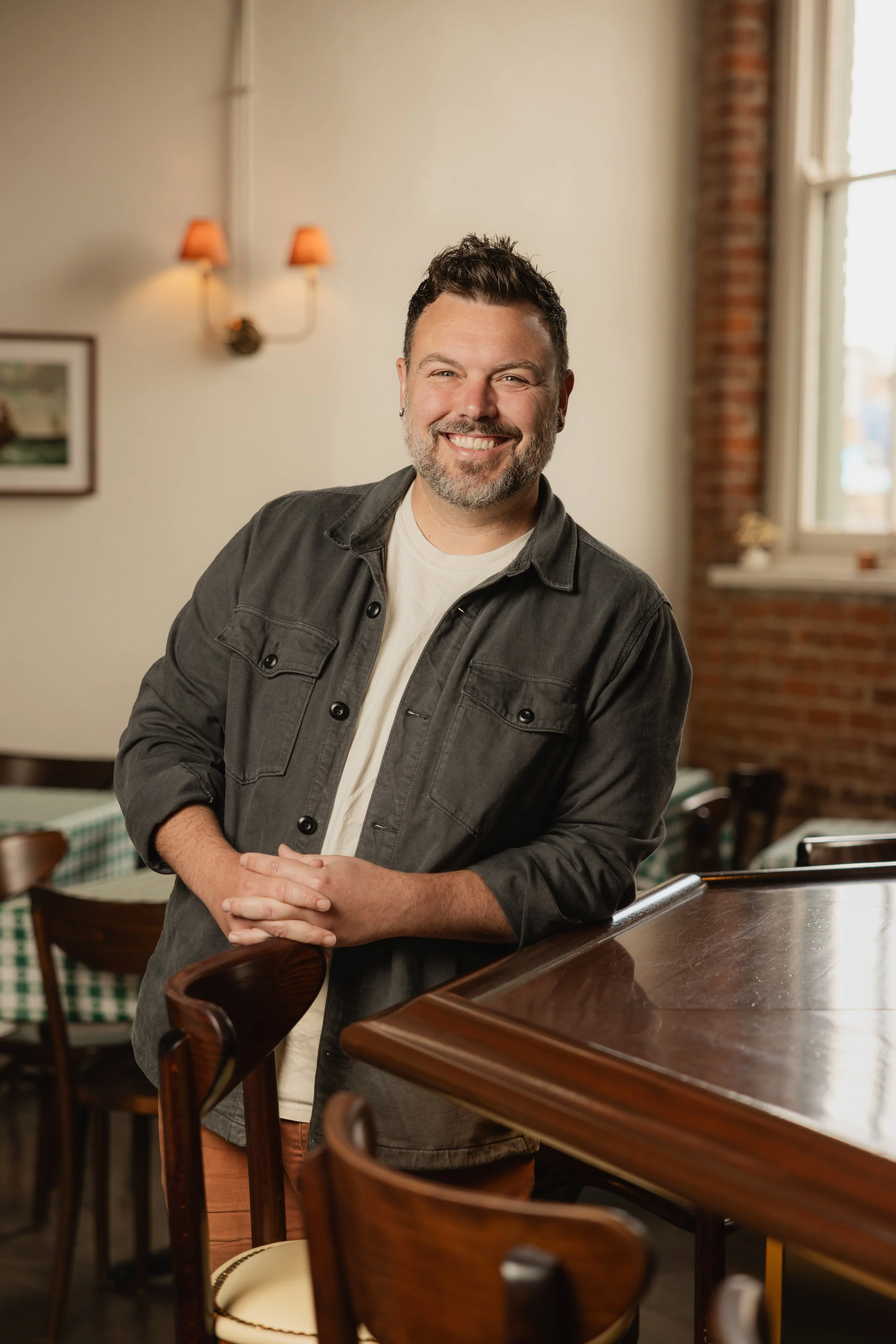
Mike Dew
Dew’s childhood pizza was not the sort that usually gets treated like a culinary origin story. He grew up around Cincinnati and Northern Kentucky eating the pizza of Midwestern ’80s and ’90s childhoods: Pizza Hut pan pizza with crisped pepperoni, school cafeteria rectangles, Snappy Tomato, and LaRosa’s, especially with the Buddy Card, the chain’s buy-one-get-one pizza deal. “I always loved pizza,” he says, “but didn’t really get exposed to other pizza styles until I began traveling in my early 20s.”
Once he started seeing more of the country, the world of regional pizza opened up quickly. Dew found East Coast mom-and-pop pizzerias in rural Pennsylvania, New York-style slices in Philadelphia, neo-Neapolitan in Phoenix, Sicilian in Boston, wood-fired pizza in San Francisco, Roman-style al taglio in Paris, New Haven apizza in Chicago, and then finally that run-in with Detroit-style in Austin. Some of those formative experiences happened far from the places that invented them, which may explain why Dew never became much of a purist. “I didn’t grow up with any pizza rules,” he says. “I learned that you could find great pizza anywhere.”
Before pizza became his work, Dew was a graphic designer, and later worked in tech startups. He talks about dough the way a designer might talk about a layout: proportion, hierarchy, process, and enough science to know when a rule is worth breaking. “Dough is bread, and bread is very much based on science,” he says. “But then the toppings become a matter of creativity, perspective, and taste.”
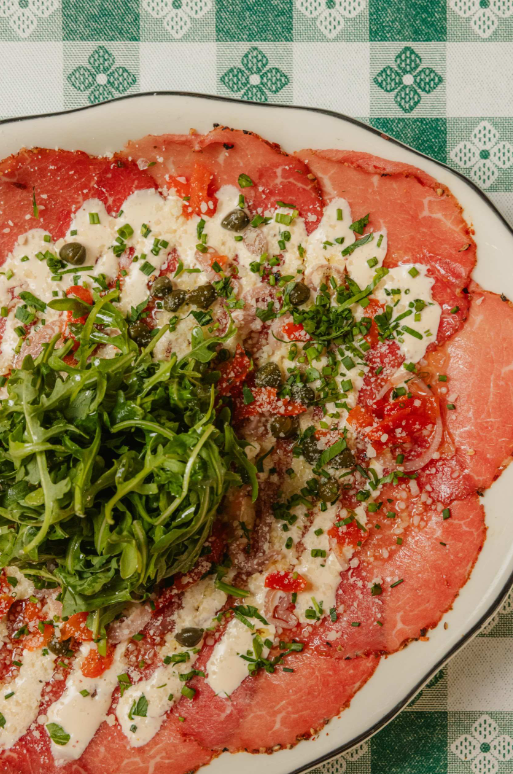
Carpaccio
At home, that creativity turned into monthly pizza parties. The Detroit-style experiments that began after the Austin trip grew into nights of testing toppings, salads, wines, and a negroni. Dew loved the crispy cheese edge of Detroit pizza, but a restaurant demanded a method that didn’t require one pan for every dough. Chicago tavern-style was getting more attention, though he wanted a crust with more hydration and chew.
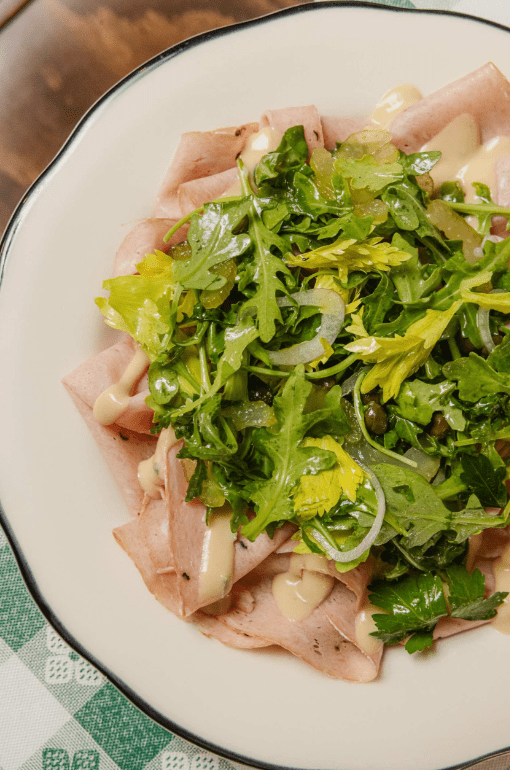
Mortadella tonnato
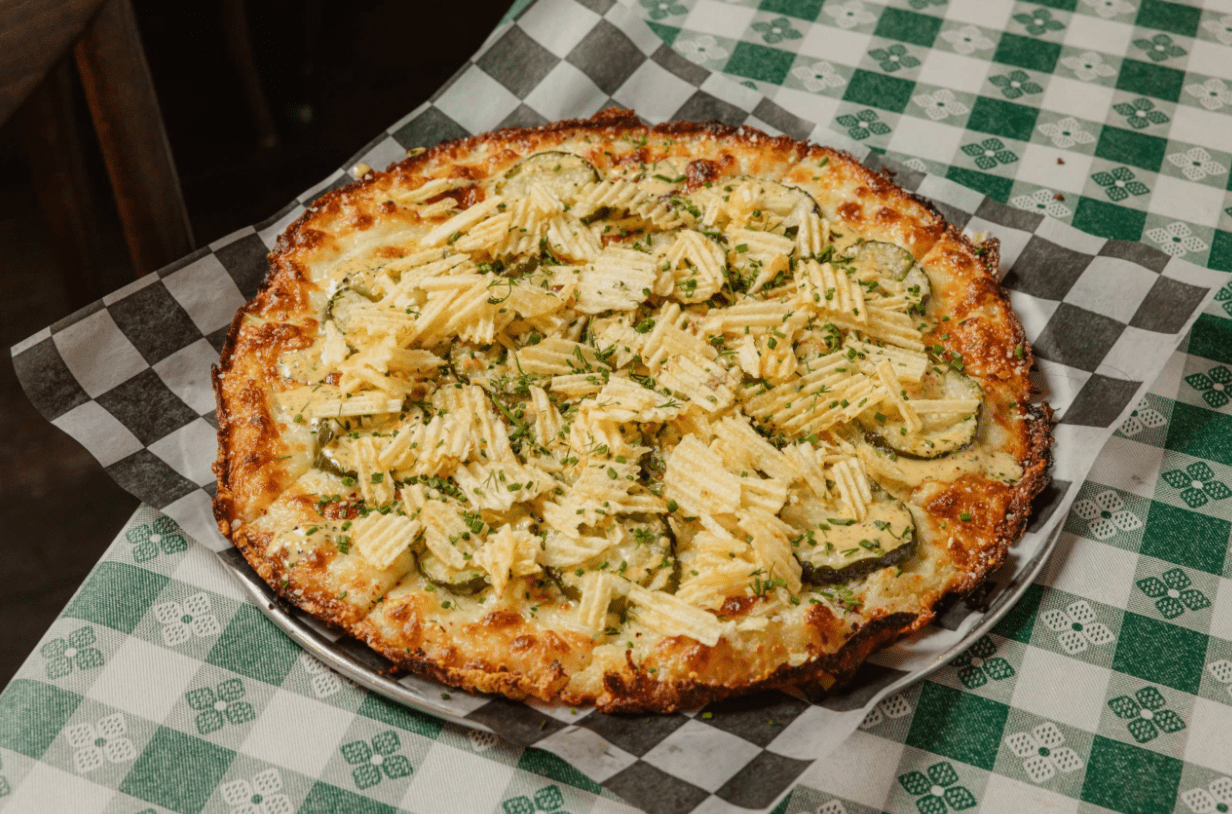
The Pickle Power
He began seeing a larger pattern in the pizzas served across the Midwest and beyond, what he calls the “Bar Style Pizza Belt,” running from Milwaukee through Chicago, St. Louis, Dayton, Columbus, New Jersey, and up to Boston’s South Shore. Wayfarer’s pizza came from that map: square cut, crisp at the edge, more hydrated than a typical tavern crust, and built with a Detroit-style cheese perimeter.
The restaurant itself came from a building Dew already knew. He and his wife live in Dayton and had walked past the Burton Building often, a corner space with big windows, natural light, a park across the street, and a garage door that made deliveries look less like punishment. Dayton was changing, and Dew thought the space would eventually go to somebody. “I thought that if I didn’t take the space then something that I might not be as happy with would go in,” he says. “So, I had to put my money where my mouth is.”
Dew had already spent years close to restaurants before Wayfarer. He was a co-owner and partner in Lang Thang Group, the Cincinnati-area restaurant company behind Pho Lang Thang, the Asian street-food restaurant Quan Hapa, and Hi-Mark Bar. That gave him a view of the business that went beyond logos and menus, with enough time around operators, leases, service, and neighborhood restaurants to understand what he was getting into with Wayfarer.
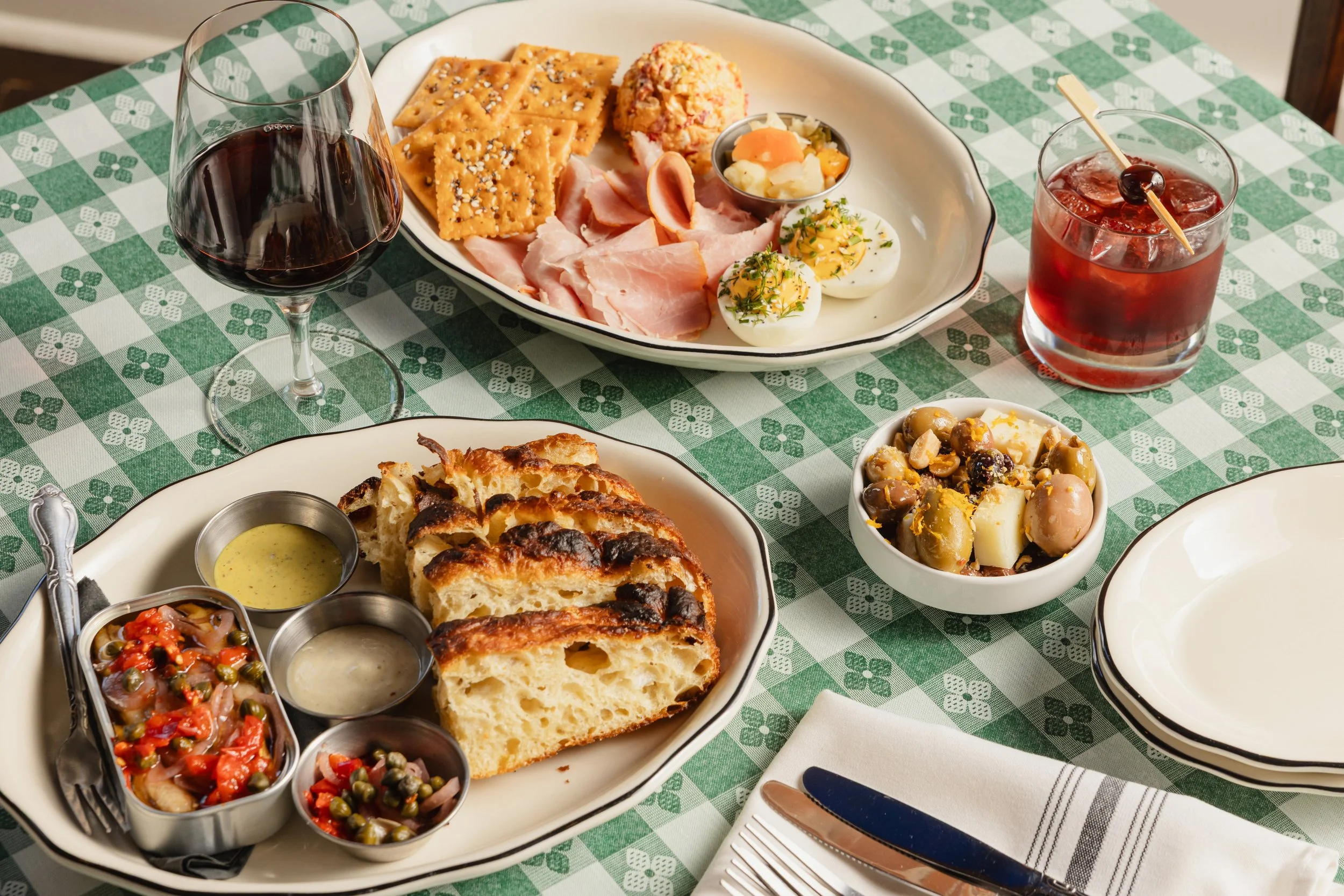
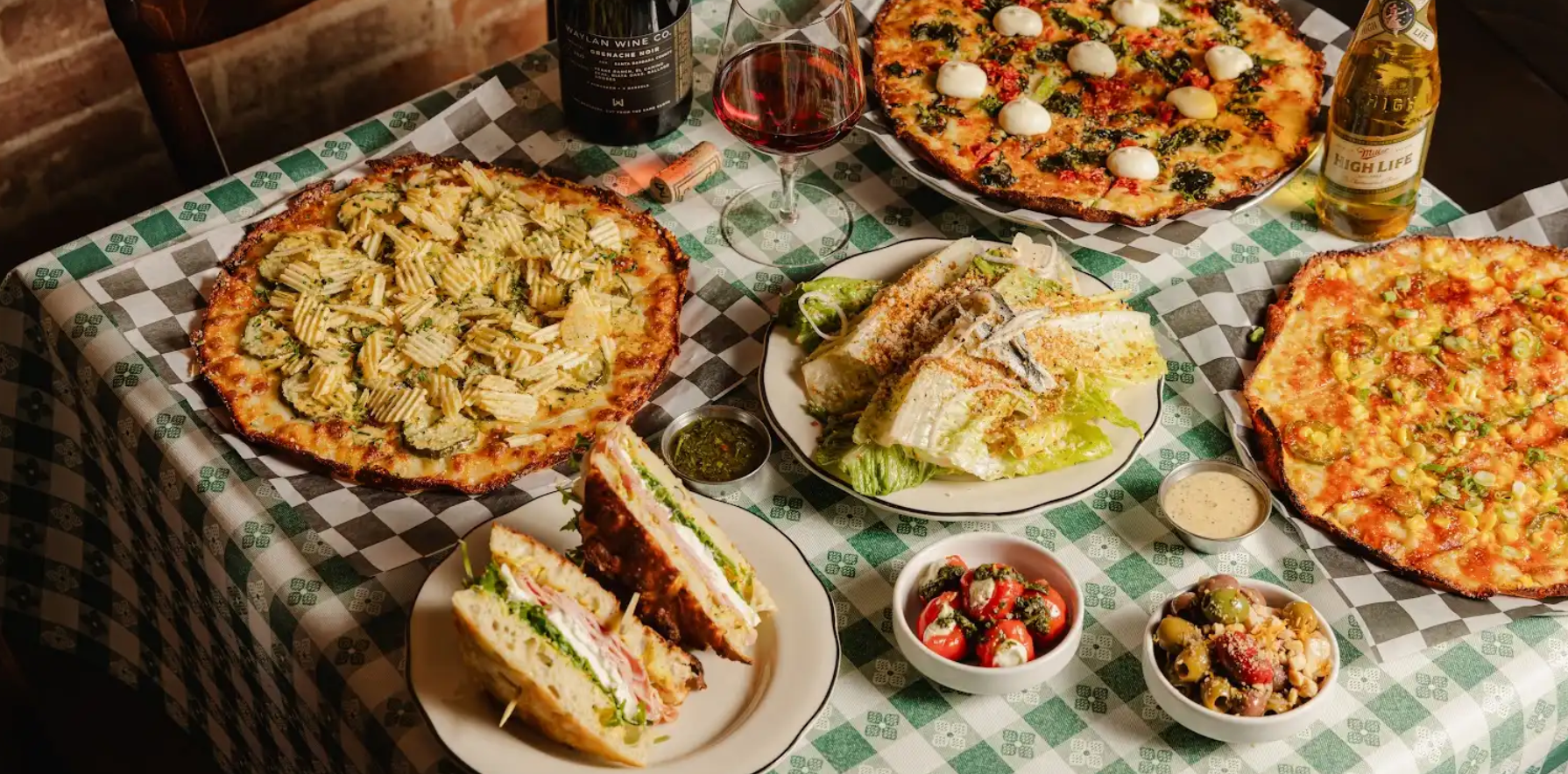
Wayfarer’s happy hour spread
Wayfarer doesn’t make a traditional Cincinnati-style pizza. Dew sees LaRosa’s as the default local definition: lower-hydration thin crust, sweet-ish sauce, provolone, toppings under the cheese, and larger squares. Wayfarer shares the square-cut DNA and little else, with pies like the Tavern Classic with house-made fennel sausage, onion, banana peppers, and red sauce; Trusty Chords with sausage, rapini, garlic, bottarga, lemon zest, red sauce, and a five-cheese blend; and Pickle Power, a white-sauce pizza with confit garlic cream, pickles, onion, dill, chives, house-made ranch, and ridged potato chips.
He still thinks regional labels have their place. Detroit, New Haven, tavern-style, and the rest give people a useful starting point. The problem comes when those labels turn into courtroom evidence. “People really love to be designators of authenticity,” Dew says.
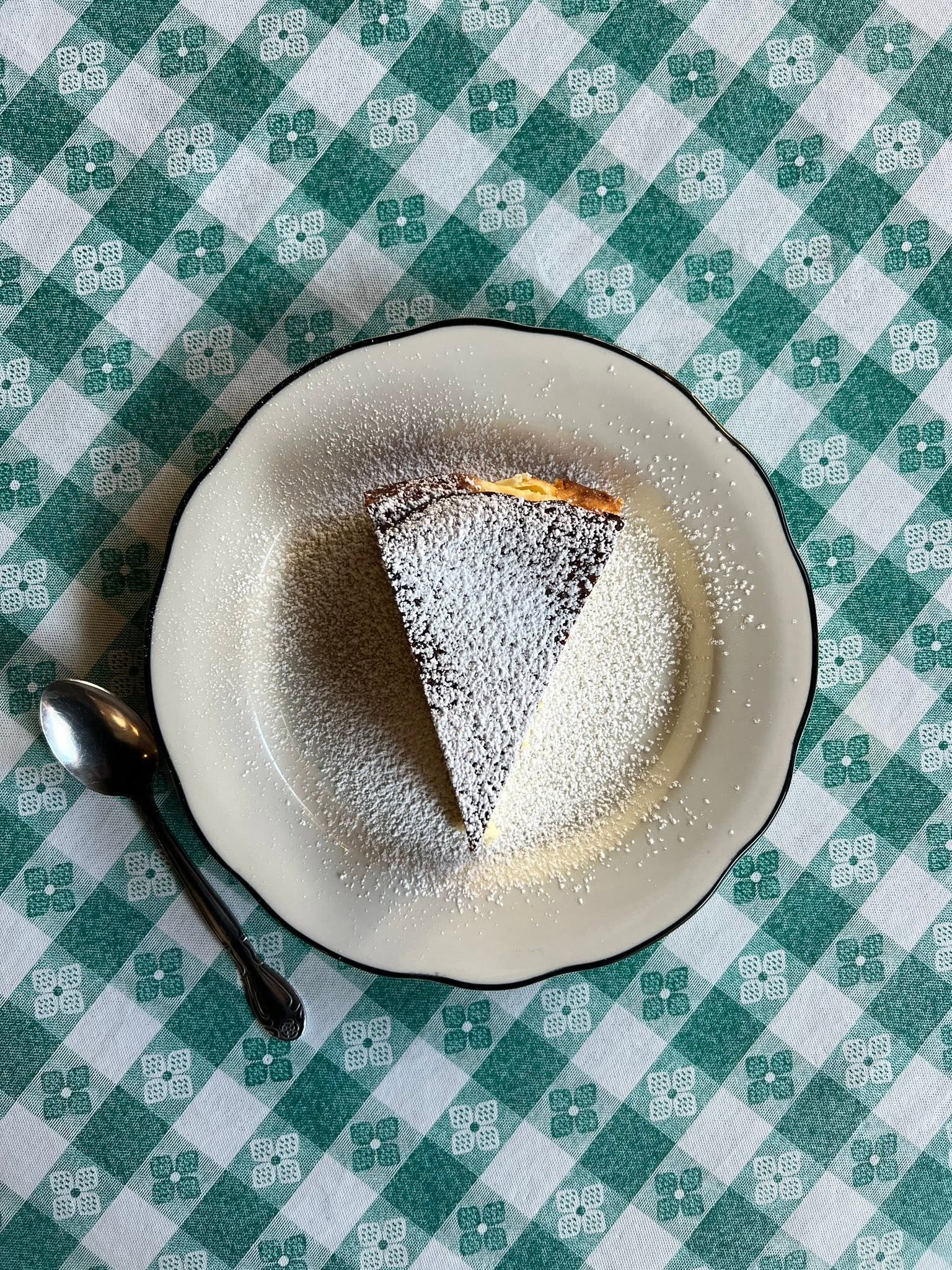
Basque cheesecake
Wayfarer sidesteps that fight by giving itself only one real comparison point. It is a pizza with a point of view, made by someone who learned early that the best pies are not always found where they supposedly belong. “That’s the beauty of the history of pizza and what makes it exciting,” Dew says. “It isn’t static, and is always evolving.”
In Dayton, Dew is betting that the future of pizza involves fewer rule books and more crispy-edged square-cut pies.

Sanaa Abourezk Is Still Cooking From Damascus
At Sanaa’s Gourmet Mediterranean, a Syrian-born chef has spent two decades changing how Sioux Falls eats.
These Are West Virginia’s Michelin-Worthy Restaurants
These are the restaurants across the Mountain State that deserve a place in the Michelin Guide.