
PALM BEACH | MIAMI | FLORIDA
After Reinventing Kosher in West Palm, Israeli Chef Eyal Shani Sets His Sights on Miami With Bella
By Eric Barton | Nov. 10, 2025
AUTHOR BIO: Eric Barton is editor of The Adventurist and a freelance journalist who has reviewed restaurants for more than two decades. Email him here.

Eyal Shani likes to talk about tomatoes. Not in the way most chefs talk about tomatoes, like they’re tools, seasonal and useful. He talks about them like they are breathing.
He remembers cutting into one, years ago, and contemplating “the flesh of the tomato as if it were meat.” That was the moment he understood that a tomato could be treated like a steak or sashimi, and that every ingredient “has its own life, soul, and way of reflecting the world, much like people do.” That idea — that a humble ingredient has a biography — is the spine of Shani’s cooking.
Right now, that philosophy is landing in South Florida at full volume. Malka, his kosher restaurant in West Palm Beach, just marked its first anniversary, and he came to town this month to cook there and celebrate. He’s also been in Miami quietly mapping out something big.
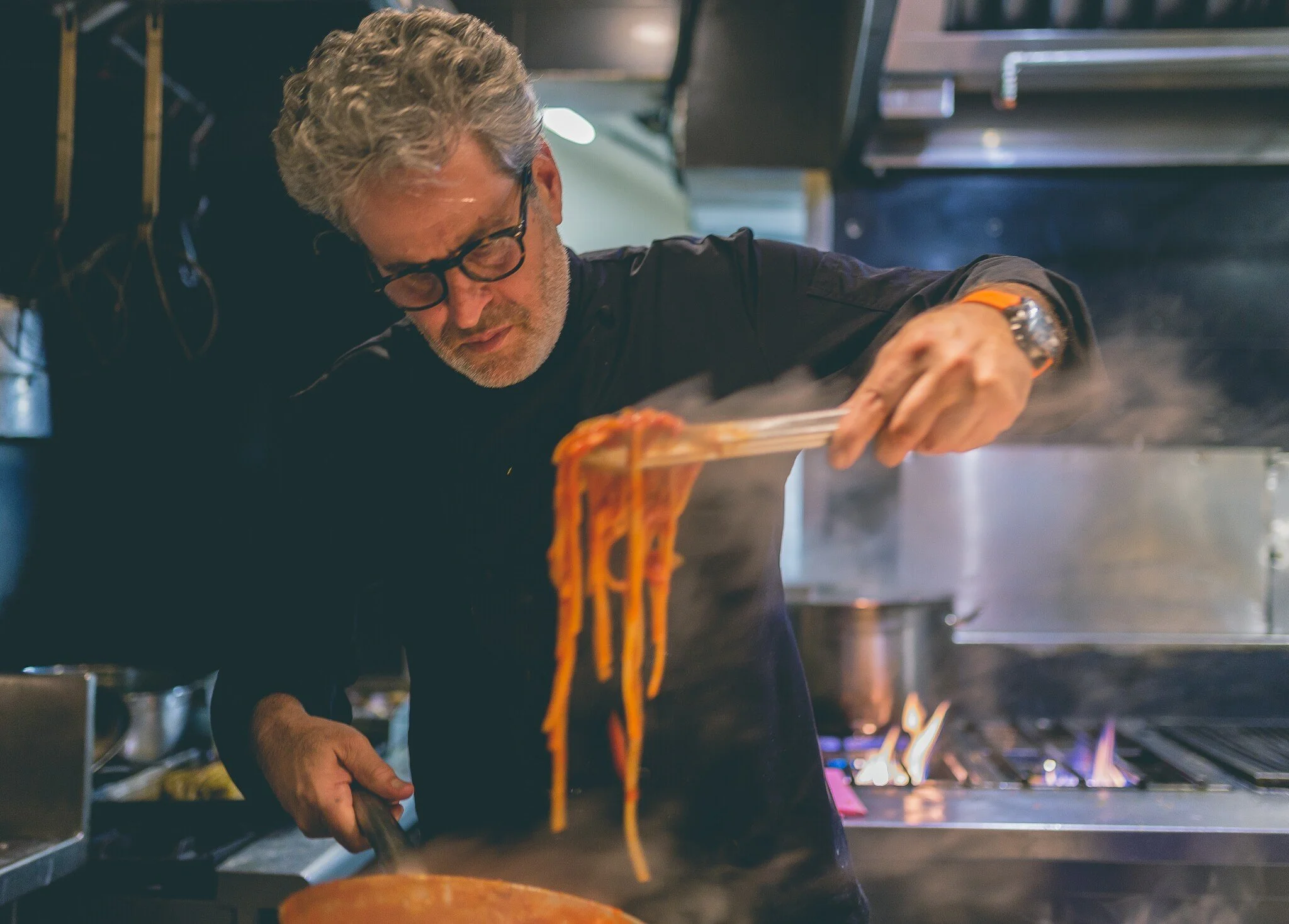
Chef Eyal Shani
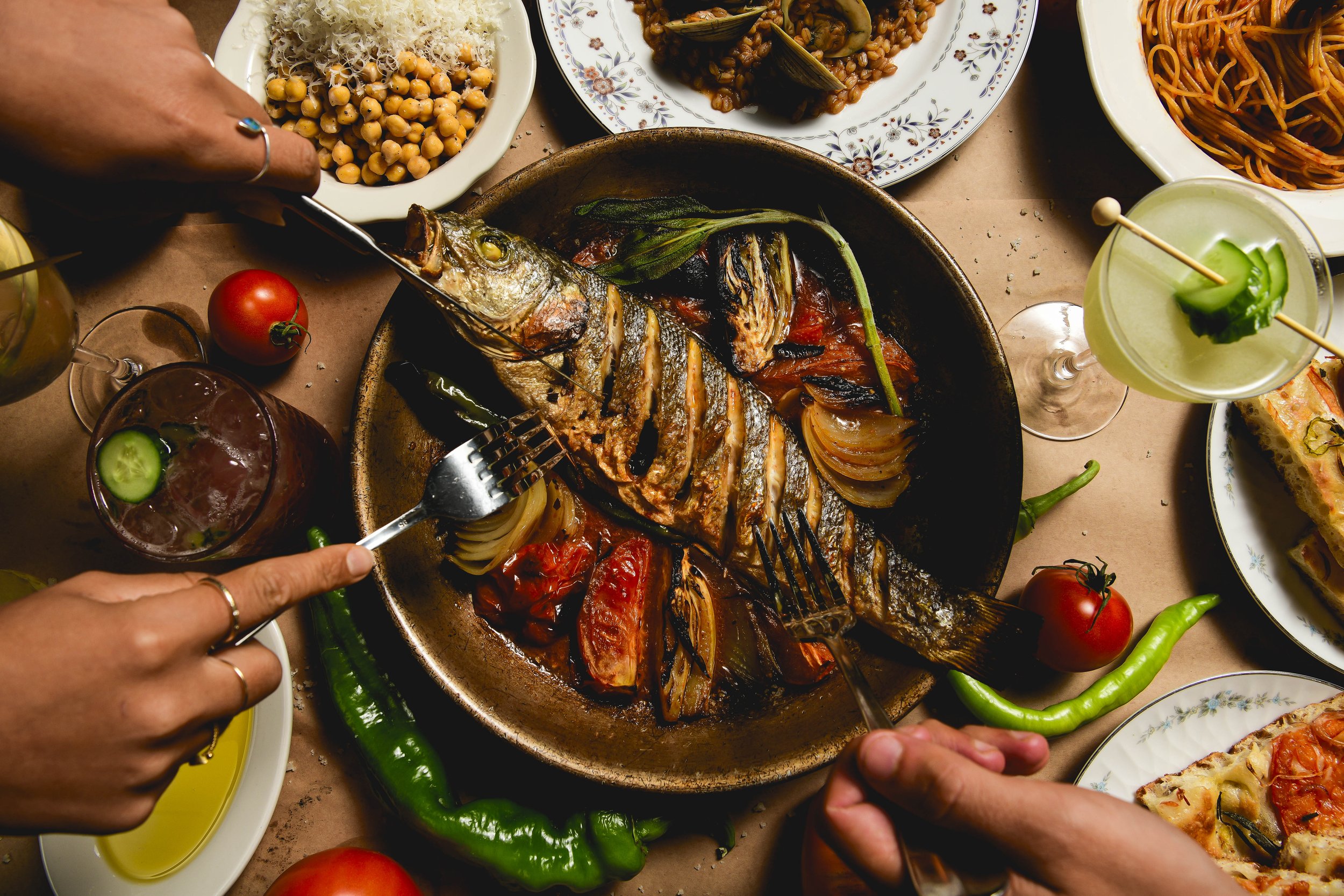
He’s talking about several new concepts opening in Miami, starting with Bella — an Italian trattoria-like project in South Beach built around the idea of an imagined grandmother named Bella, “who nurtures through food and nostalgia.”
To understand why a chef with global reach is now obsessing over kosher fire, you have to go back to Jerusalem. He grew up the son of a lawyer and an avid home cook in a country that, as he tells it, didn’t yet have a confident national cuisine. Immigrants made the food of their homelands quietly, “in private,” and there was no shared Israeli cooking “on the table for everyone.” So he went looking for it. He talks about women in the Old City selling vegetables and simple dishes, and he talks about finding rosemary, sage, thyme, and wild mushrooms growing there. Those herbs, he says, “became the foundational ingredients of my cooking.” He didn’t go to culinary school. He built an identity from markets.
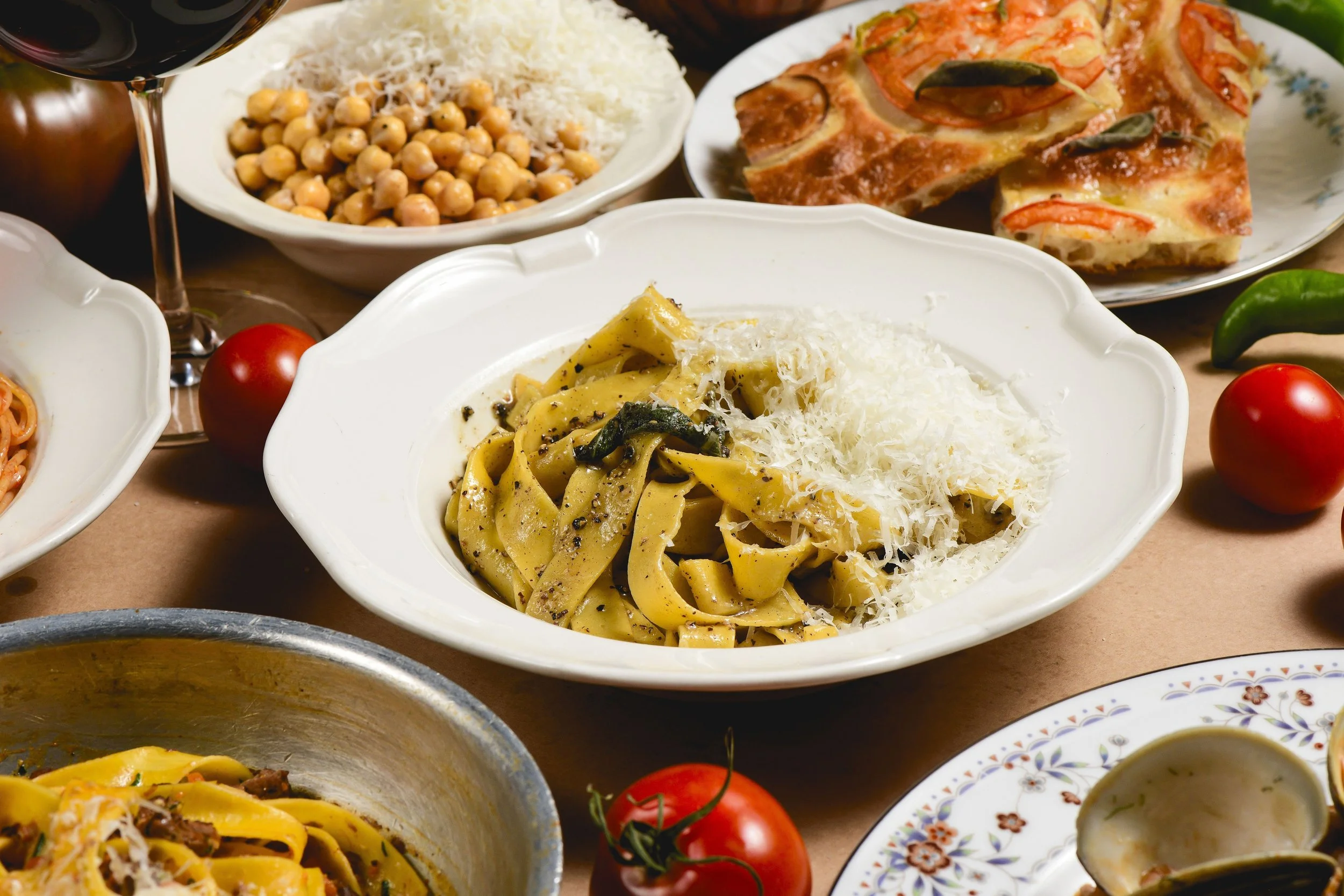
Black pepper pasta at Bella Miami
By 1989 he opened his first restaurant, Ocean, in Jerusalem, where he began forming what he calls his “culinary language”: olive oil, raw vegetables, fish, tahini, tomatoes, presented with the seriousness usually reserved for foie gras. He would later become a celebrity in Israel through television — including a long run as a judge on MasterChef Israel — and that visibility did something specific for him.
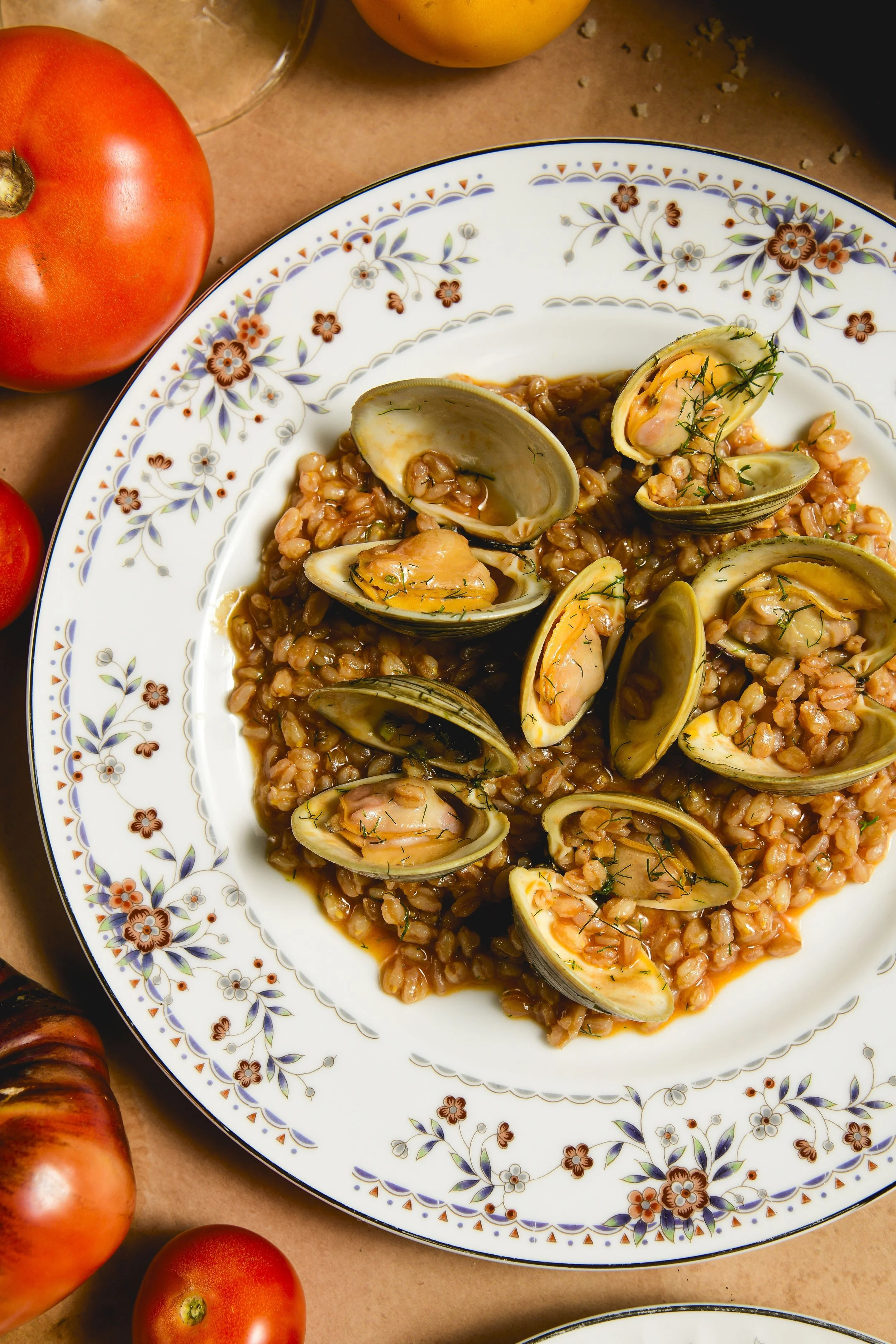
Clam farro risotto
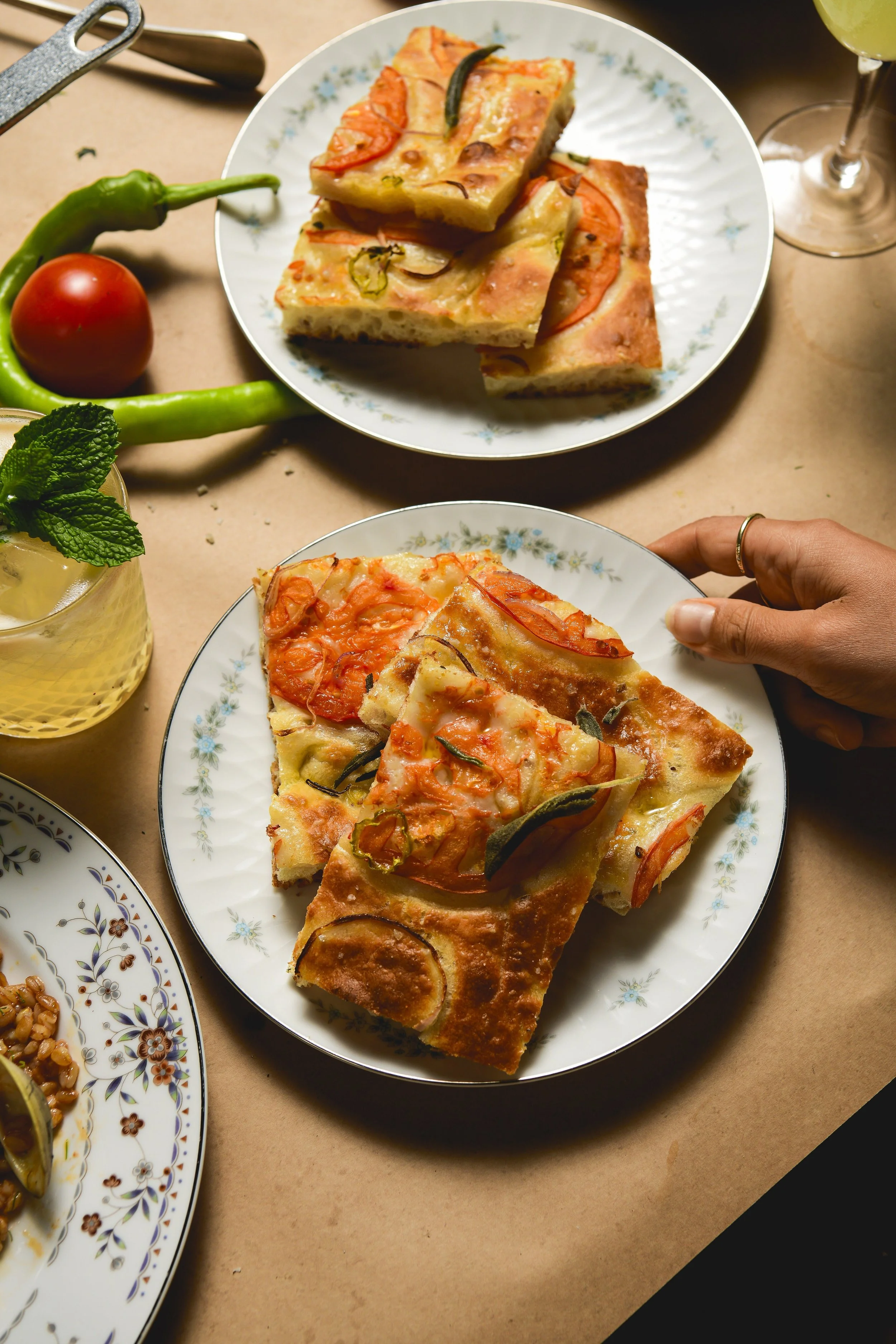
Focaccia at Bella
“I started my career with no formal knowledge, inventing everything from intuition,” he says. The work felt less like restaurant hustle and more like doctrine. “That sense of discovery gave me a near-spiritual belief that I was creating something vital for my country, a new culinary identity for Israel. The fame that followed came from this deep sense of mission and passion, which I think of as a kind of ‘small religion.’”
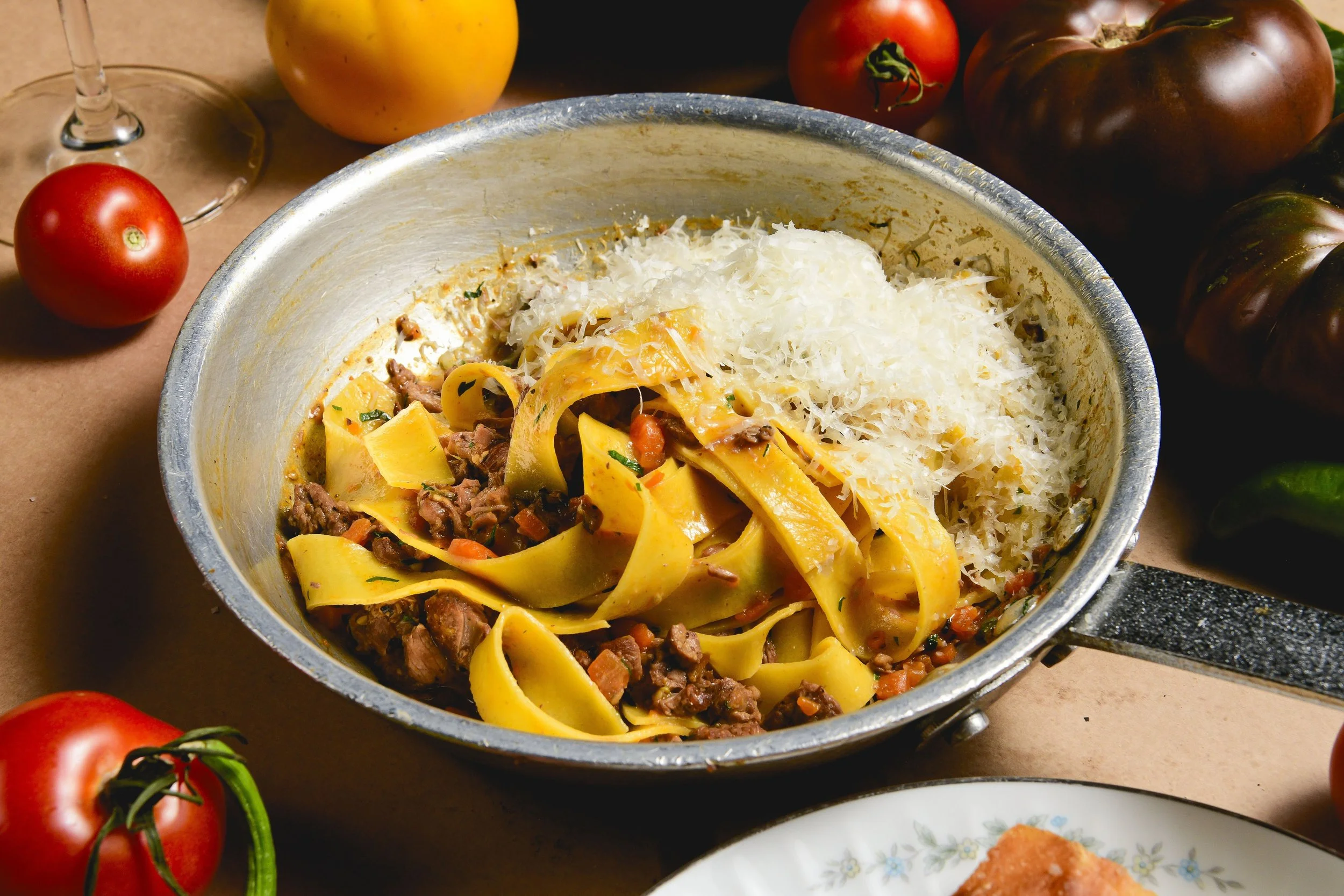
Lamb ragu
The international expansion began with Miznon, which he opened in Tel Aviv in 2011. Miznon looks casual — pita stuffed with lamb, or ratatouille, or a whole blistered cauliflower you tear apart with your hands — but the cooking is obsessive. The premise is almost confrontational: take the drama and moral weight of fine dining and shove it into warm pita. His tomato sashimi is not a gimmick. It is a thesis. It argues that vegetables can carry the same emotional and culinary weight as meat or fish.
From there came HaSalon, Shmoné, and a wave of restaurants in Paris, New York, Vienna, Las Vegas, Singapore, London, and beyond. Shmoné in New York earned a Michelin star, and HaSalon turned into a kind of roaming, late-night, champagne-soaked sermon, where dinner eventually turns into dancing on the table. At this point, Shani oversees more than fifty restaurants worldwide.
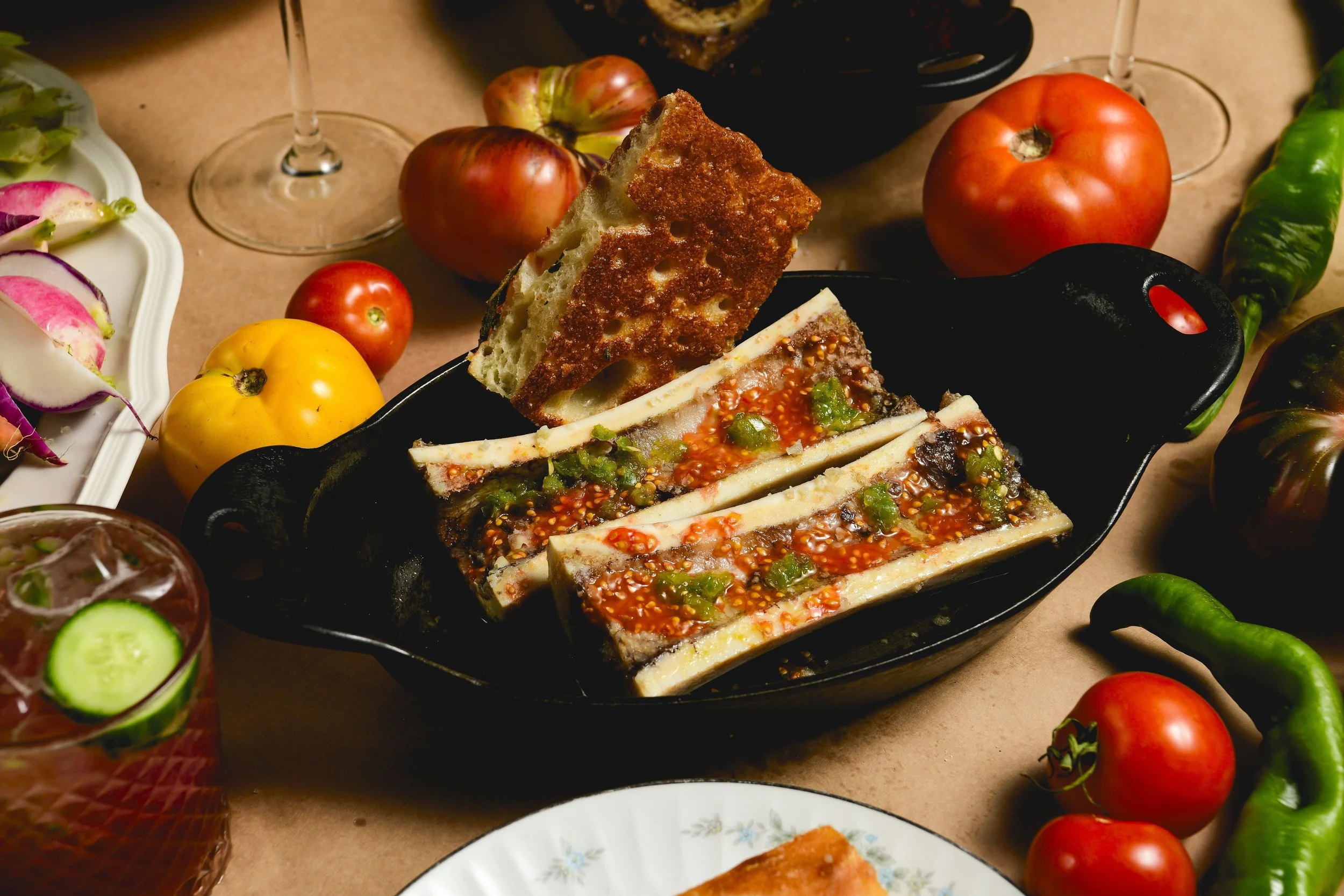
‘Marrow of Dinosaur‘
And then there is Malka. If you have not been, Malka is kosher, yes, but that word feels almost too small for what he thinks is happening in the kitchen. He says kosher has a reputation for being restrictive and heavy, and he wanted to “remove the clouds and let the sun in.” He built the restaurant around a 40-foot open-fire line where “nearly everything is cooked over a live flame,” changing what he calls the “traditional slow-cooked kosher method” into something bright, fast, and emotional. At Malka, he says, “the excitement comes from energy and intention… My inner happiness and conviction transfer directly into the energy of the dishes, which guests can feel.” The point is not just to serve kosher food that feels modern. The point is to make people feel the joy and heat of it.
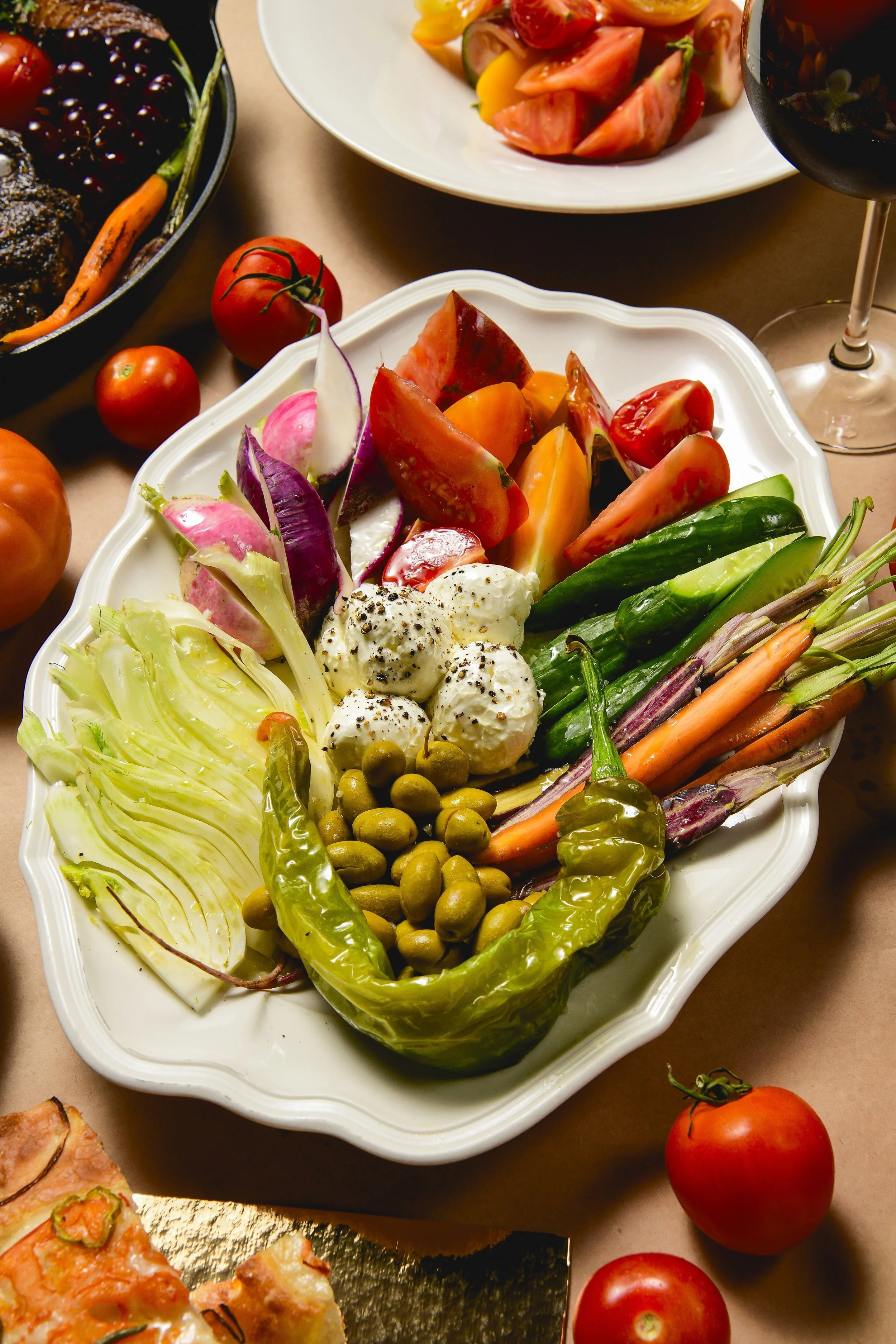
Mezze
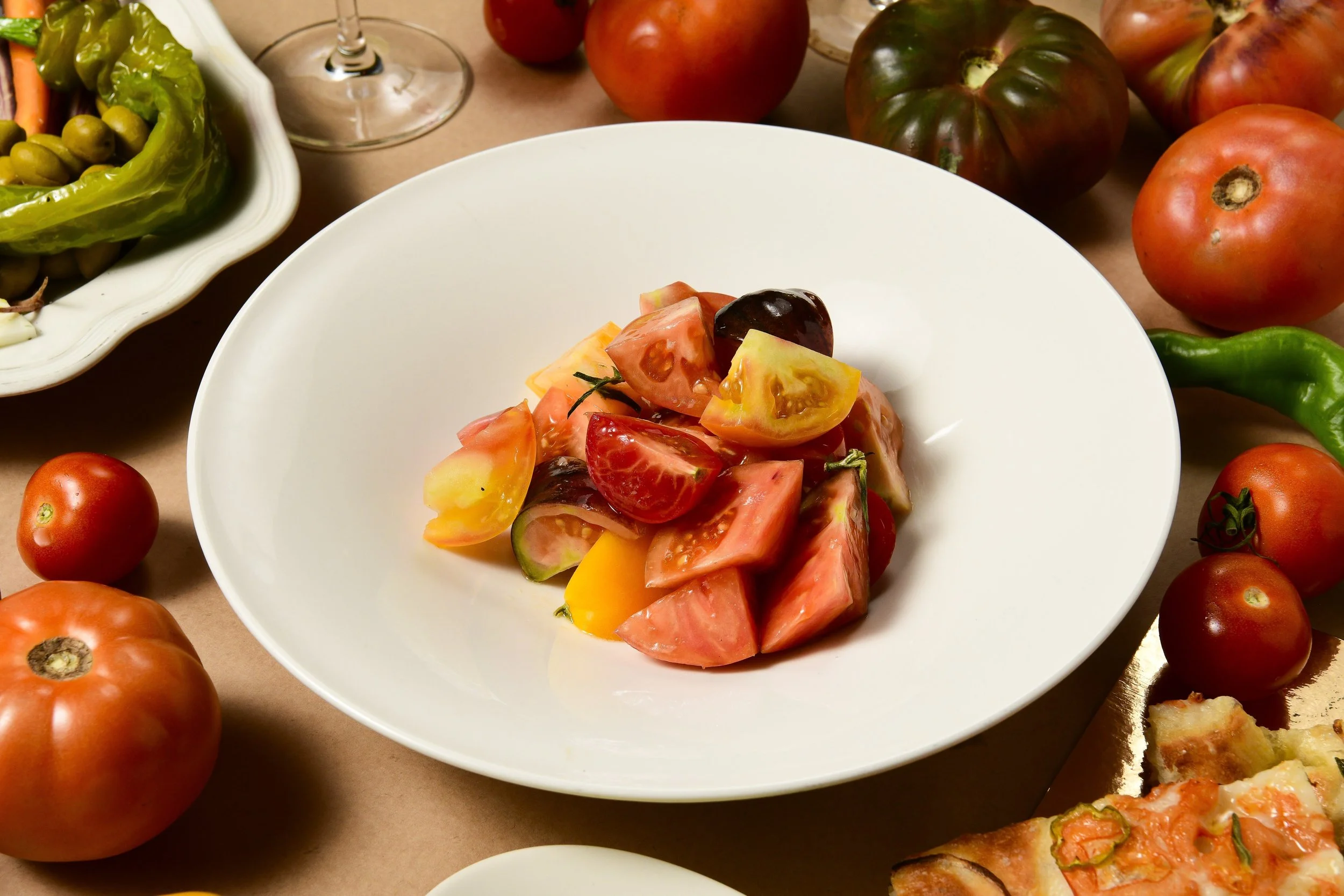
‘Pile of Tomatoes’
Cooking in America has forced him to adapt. In Israel, he says, ingredients come from “within 20 minutes of the kitchen.” Here, ingredients belong to “a massive system of management and logistics, designed to feed hundreds of millions,” which makes improvisation harder. He says that constraint pushed him to lean even harder on intention — on treating every tomato, leek, or eggplant like it’s the last one on earth.
When he talks now about Bella in Miami — pizza, pasta, risotto, warmth, story — he doesn’t describe a menu. He describes a character. “This concept is inspired by our imaginary grandmother, Bella,” he says, “who nurtures through food and nostalgia.” He wants Bella to feel like a classic Italian trattoria, seen through his lens.
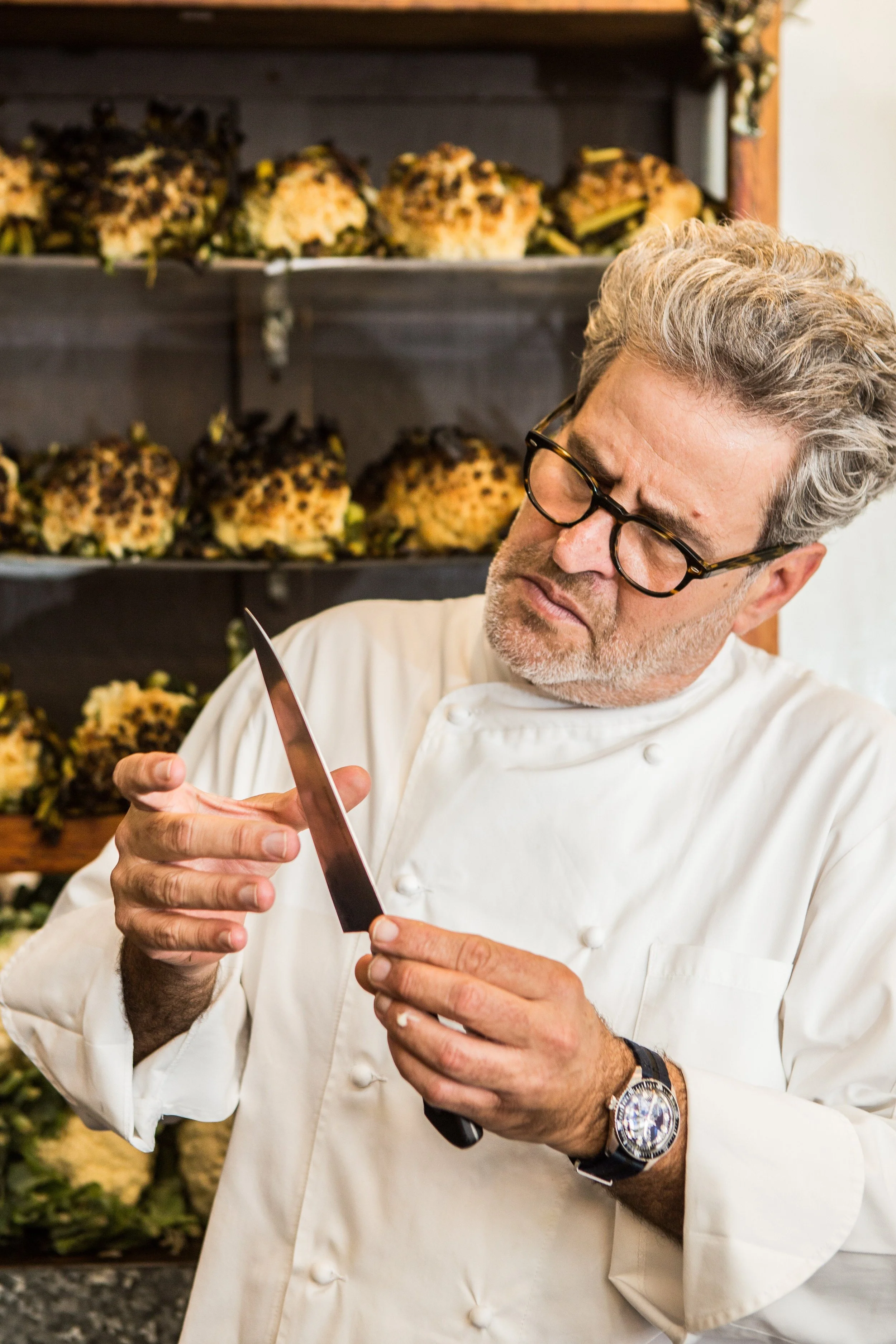
He is also walking around with an actual lens. He shoots with a camera almost constantly: people, textures, shadows. “Being behind the lens has taught me skills like how to frame a plate, the importance of lighting and its manipulation, and shadow,” he says. Photography, for him, is the same job as cooking: composition, balance, psychology.
Ask him what all of this — the anniversaries, the Miami openings, the empire — is really about, and he will not say growth. He will say energy. “Diners may not understand the technicalities,” he says. “But they can feel the joy and belief behind the food.”


The 15 Best Vancouver, WA, Restaurants: From Food Trucks to Chef-Driven Dining
We take a tour of new openings, food trucks, and chef-driven spots for pizza, tacos, seafood, brunch, and date night.