ASHEVILLE | NORTH CAROLINA
Gemelli Turns a Flooded Asheville Landmark Into a Comeback Story
GEMELLI | MAP | INSTAGRAM
By Eric Barton
Photos by Andy Lukacs Ormond
May 29, 2026
AUTHOR BIO: Eric Barton is editor of The Adventurist and a freelance journalist who has reviewed restaurants for more than two decades. Email him here.

They were halfway through the renovation of the old Biltmore Hardware building when they finally got down to the original walls.
The mud from Hurricane Helene had been hauled out. The ruined floor had been stripped away. The layers of old paint had been scraped back, some peeled off by the flood itself, and underneath was something nobody had expected.
Anthony Cerrato was preparing to move his Italian restaurant Gemelli into the old hardware building, and the walls were a bright spot in the long renovation. Cerrato recalls: “What we uncovered was this interesting warm textured finish that was so beautiful, we decided to just leave it as is.”
The old Biltmore Hardware building could have become a sad Asheville post-Helene landmark, a brick reminder of how much the storm took from Biltmore Village. Instead, Cerrato bought the 1923 building, restored what could be saved, rebuilt what could not, and moved Gemelli from West Asheville into one of the most visible corners of the Village. The result is more than a new address for his restaurant. It’s a renovation that turns one of Asheville’s hardest-hit historic buildings back into a working restaurant, with pasta by the windows, copper catching the light, and the daily clatter of people on the job again.

Biltmore Village has been through this before. Floods have wrecked and rewritten the neighborhood more than once, including the 2004 flood that also damaged this same building. Helene arrived with a different brutality, filling storefronts with mud and forcing a village built around old brick, small businesses, and daily foot traffic into a slow recovery. Cerrato’s renovation doesn’t erase the storm; it keeps the scars where they make sense, replaces what the water took, and puts people back inside a building that Asheville has been patronizing for a century.
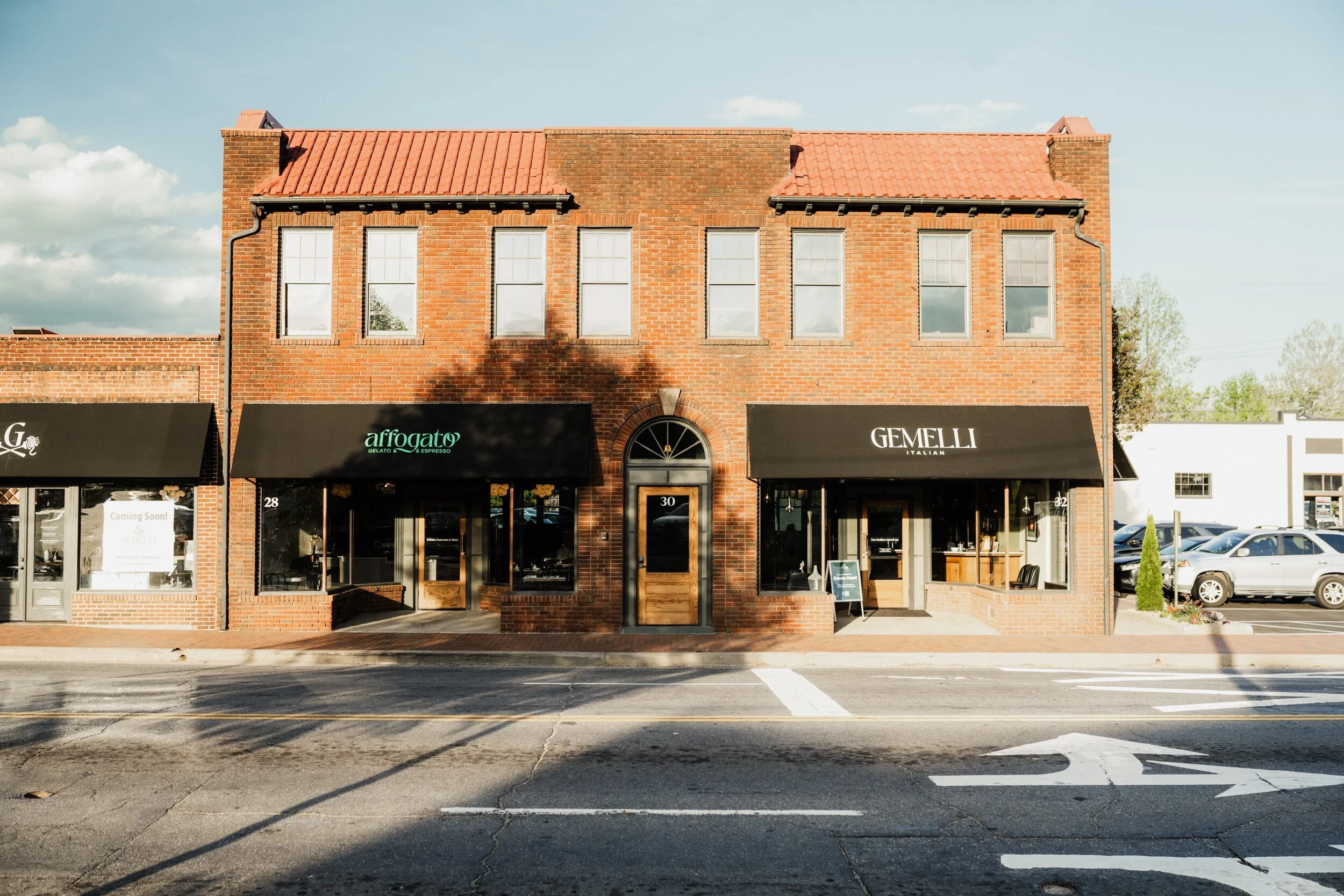
The building sits at one of the main entrances to the Village, all windows and old brick and accumulated Asheville memory. Cerrato became involved with its renovation after getting approached by the former owner, David Ross of Falcon Construction. “I could have moved Gemelli somewhere else that was less expensive and just as good a location, but being part of rebuilding Biltmore Village was a big draw for me,” Cerrato said. “The legacy of George Vanderbilt and Biltmore has played such an important role in Asheville’s history, and this Village is part of that.”

Cerrato has been around Asheville long enough to understand the weight of a building like this. He moved here after high school, trained at A-B Tech, cooked in his father’s restaurants, and opened Strada Italiano downtown in 2012. Gemelli followed in 2022, a more casual Italian American restaurant named in part for his twin daughters. His son Gabe Cerrato now leads the kitchen there, which gives the move to Biltmore Village the feel of a family restaurant stepping into a family-sized restoration.

When Cerrato first walked through the building after Falcon Construction had mucked it out, there was not much left on the first floor beyond the bones. The floodwater had risen nearly to the original tin ceiling, which survived.
“What I saw during that walk through though was a blank slate with amazing bones that could be reconfigured in a new way,” Cerrato said. “I’ve been in Asheville for decades and remember very well the two restaurants that were here prior. They were successful, but I noticed things where there could be a better flow or usage of a space. Helene essentially did the demolition, so I took that as an opportunity to build it back better while preserving the history of this landmark property.”
The exterior couldn’t be substantially changed because the building is in a historic district. Brick had to be repaired. Windows had to be replaced with similar wooden-framed ones. The inside offered more room to rethink things, although Cerrato kept what deserved another life.

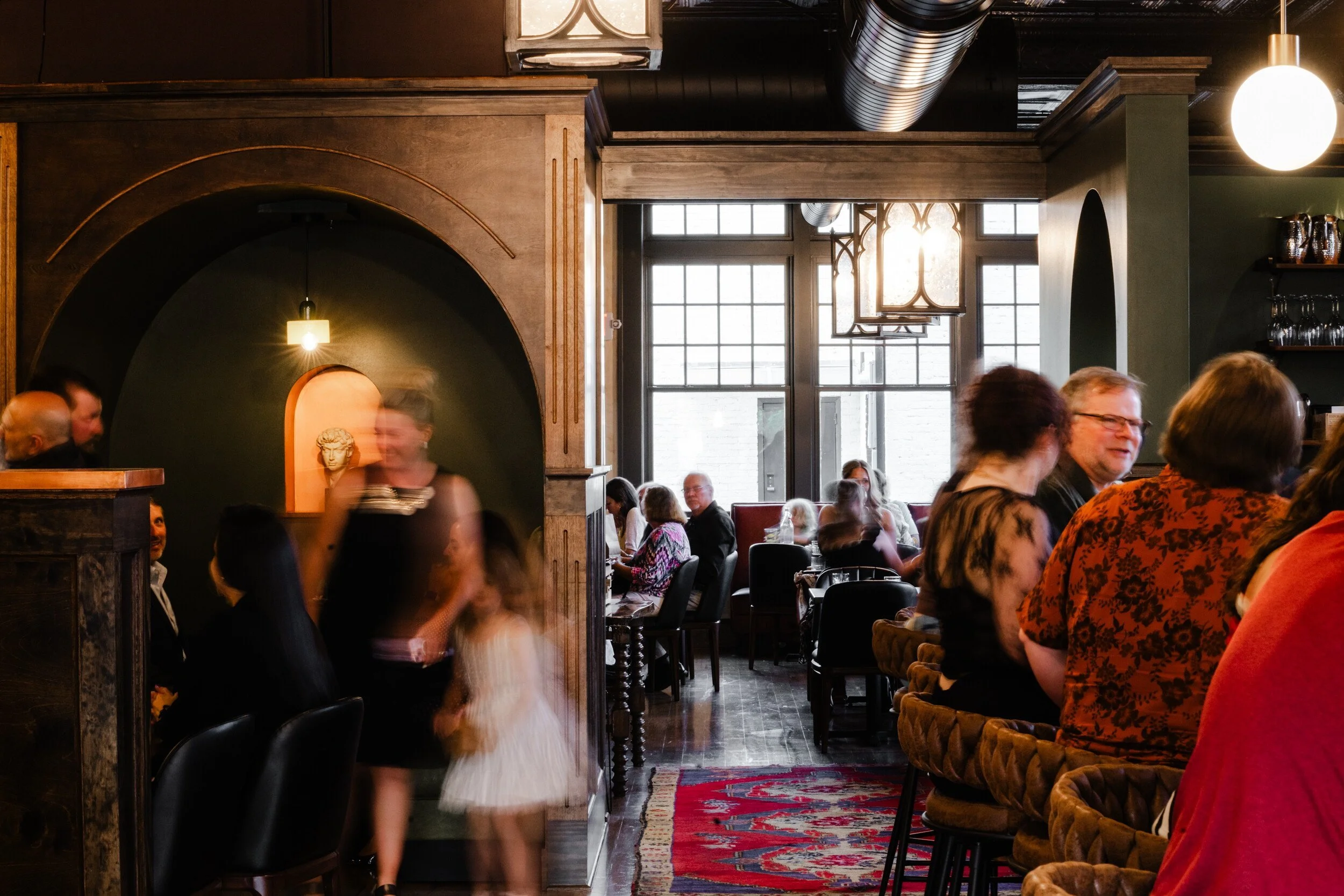
The bar was refinished and restored. The original tin ceiling was repainted. Antique glass block transom windows were repaired. Copper from the old window trim became a quiet motif, carried into quilted copper hood covers and a kitchen backsplash. The restaurant now feels assembled more than decorated, with antique-store finds, art deco milk glass sconces, warm lighting, and a sense that somebody resisted the temptation to make everything look recently purchased.
“When we did the interior decor, we wanted to make the space feel like it’s been here 100 or so years but with modern touches and comforts,” Cerrato said.
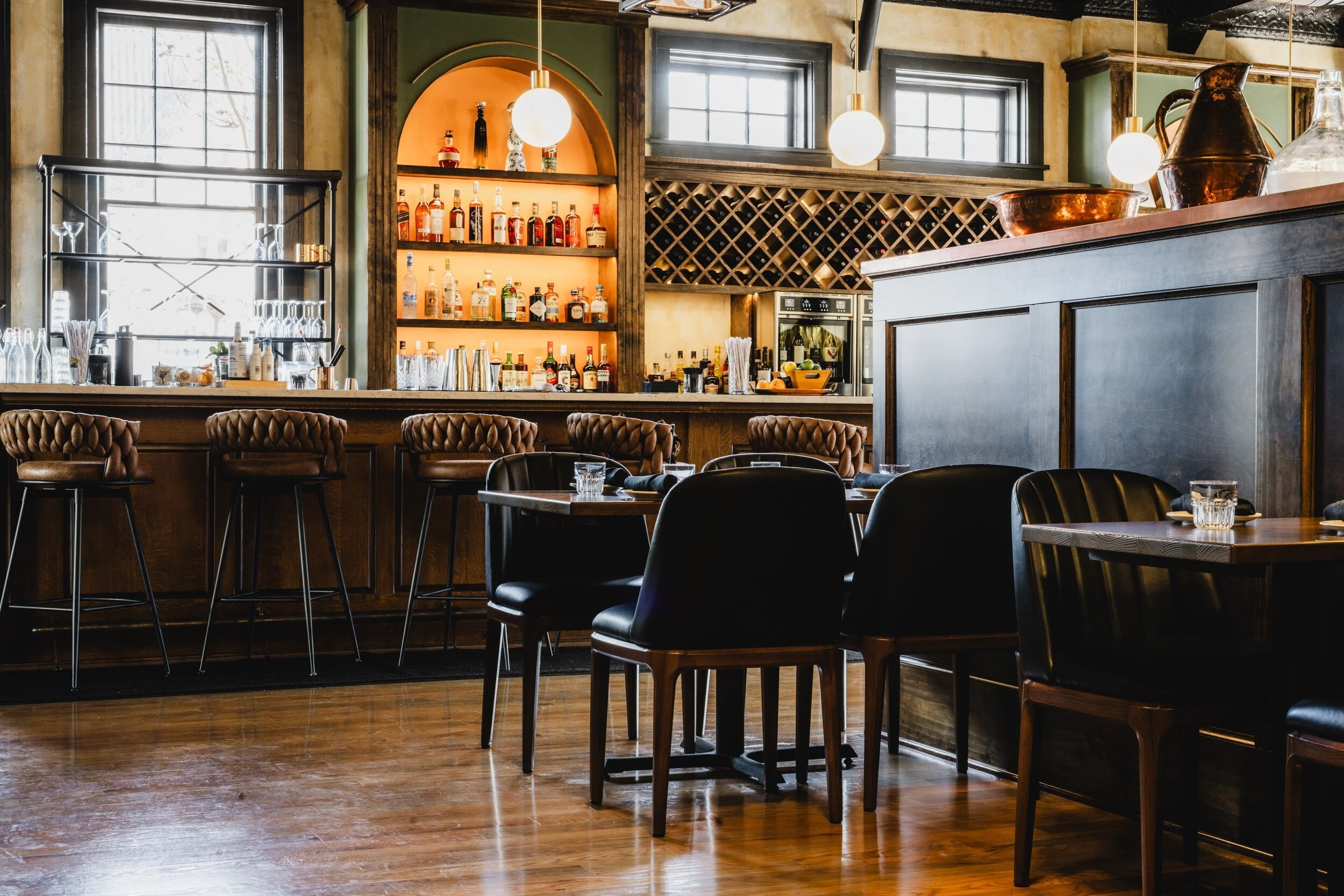
Some details are personal. Arches in the cubby booths and bar shelving and separating the spaces nod to Fiore’s, his father’s downtown restaurant, where Cerrato once worked as chef. The big gold booths came over from Westgate after another booth plan went sideways, an accident that apparently knew what it was doing. Cerrato and his wife, Jennie Cerrato, spent real time on the lighting and bathrooms, which sounds minor until you see it. “I think you can tell a lot about a restaurant and their standards when it comes to restrooms,” he said.
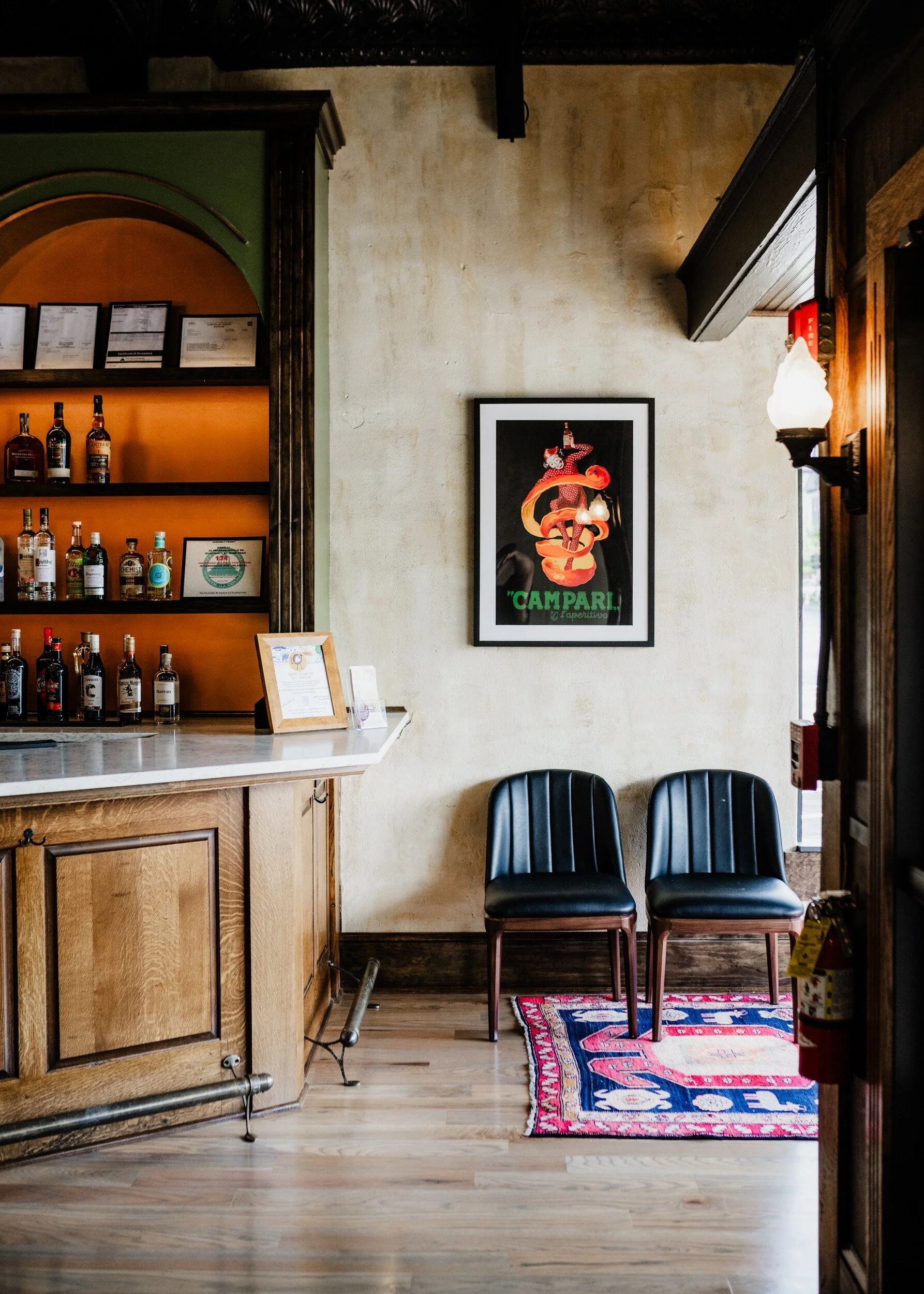
The kitchen was given its own bit of theater, partly because it’s visible from the street. Pasta-making sits near the windows. The chef’s table gets the attractive backsplash. “This is a cornerstone property that’s like a gateway to Biltmore Village,” Cerrato said. “This intersection is one of the highest trafficked areas in town, so having this open shows that there’s life. That’s one reason I like our big storefront windows, so that people can see the life happening in this building.”
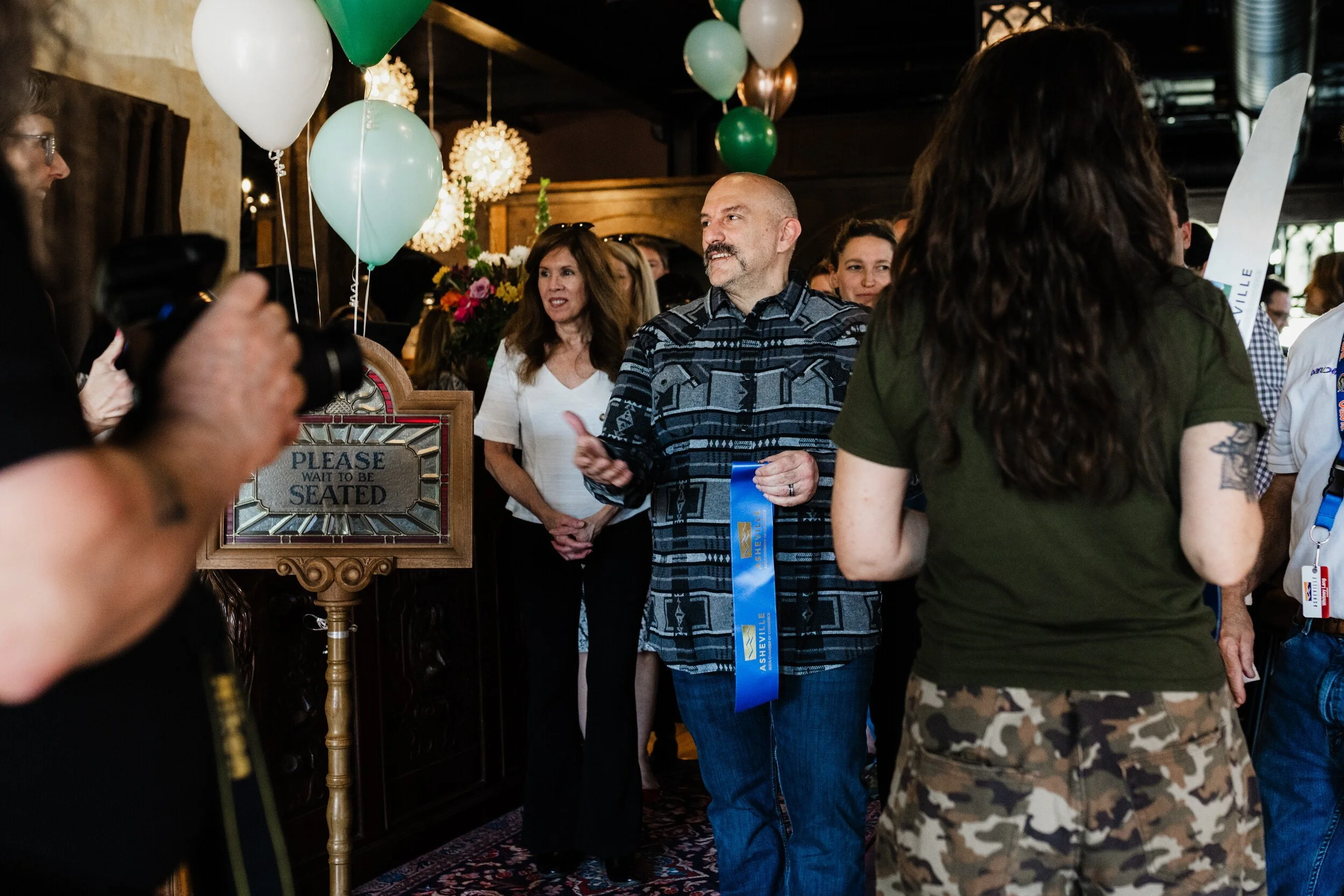
Anthony Cerrato
The Preservation Society of Asheville and Buncombe County recognized the project with a Griffin Award, which honors projects that help preserve local history. The building also won one after the 2004 flood, making it a twice-recognized survivor.
For those of us who lived through Helene, the renovation is another sign of Asheville’s return. Months passed with Biltmore Village measured in debris piles, boarded windows, and the quiet that followed the flood. Now, in one of the village’s most visible historic buildings, there’s copper catching sunlight, pasta being made by the window, and a restaurant built around a ceiling the storm could not reach.

Counter- Just Turned 5, And It’s Still Breaking All the Rules
Counter- in Charlotte celebrates five years under executive chef and owner Sam Hart, redefining fine dining with no-repeat menus and bold vision.

Rochester: One of America’s Most Underrated Restaurant Cities
If all you've ever heard about New York's capital is garbage plates, let us take you on a tour of Rochester's best restaurants.