FEATURES
We're Really Goonin’ Now, Boys
Here’s how Brandon Elliott’s viral reviews of Chinese buffets helped create the modern era of the crab rangoon.
By Eric Barton | Nov. 4, 2026
AUTHOR BIO: Eric Barton is editor of The Adventurist and a freelance journalist who has reviewed restaurants for more than two decades. Email him here.

On day 103 of his quest, Brandon Elliott went to the New Asia Buffet in Wabash, Indiana, and did what he always does: announced the rating (three stars, on Yelp), sampled the buffet, and got to the crab rangoon. He gave the place three and a half stars. Then he tried the goons.
"I'm definitely goonin’ now," he said.
That sentence, or some version of it, is the closest thing crab rangoon has to a slogan, and it arrives at a strange moment for the appetizer. A fried wonton that spent 70 years as a Chinese-American mishmash is suddenly showing up on serious menus. Chefs have begun taking it apart into a dip, rolling it into a mozzarella stick, stuffing it with, gasp, actual crab. Nobody can say how much Elliott did to make this happen, but undoubtedly people are paying more attention to deep-fried wontons stuffed with crab dip.
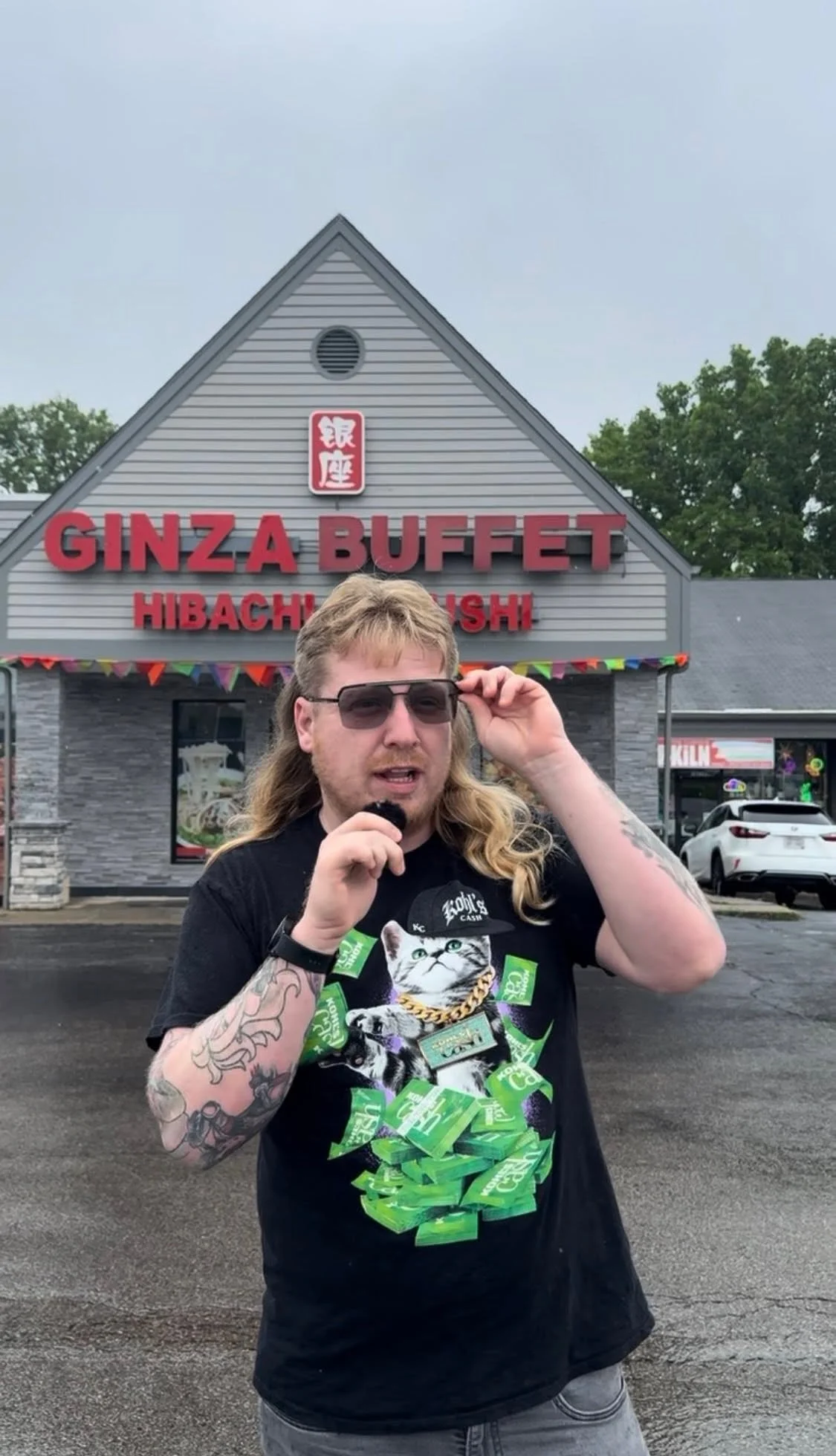
Brandon Elliott
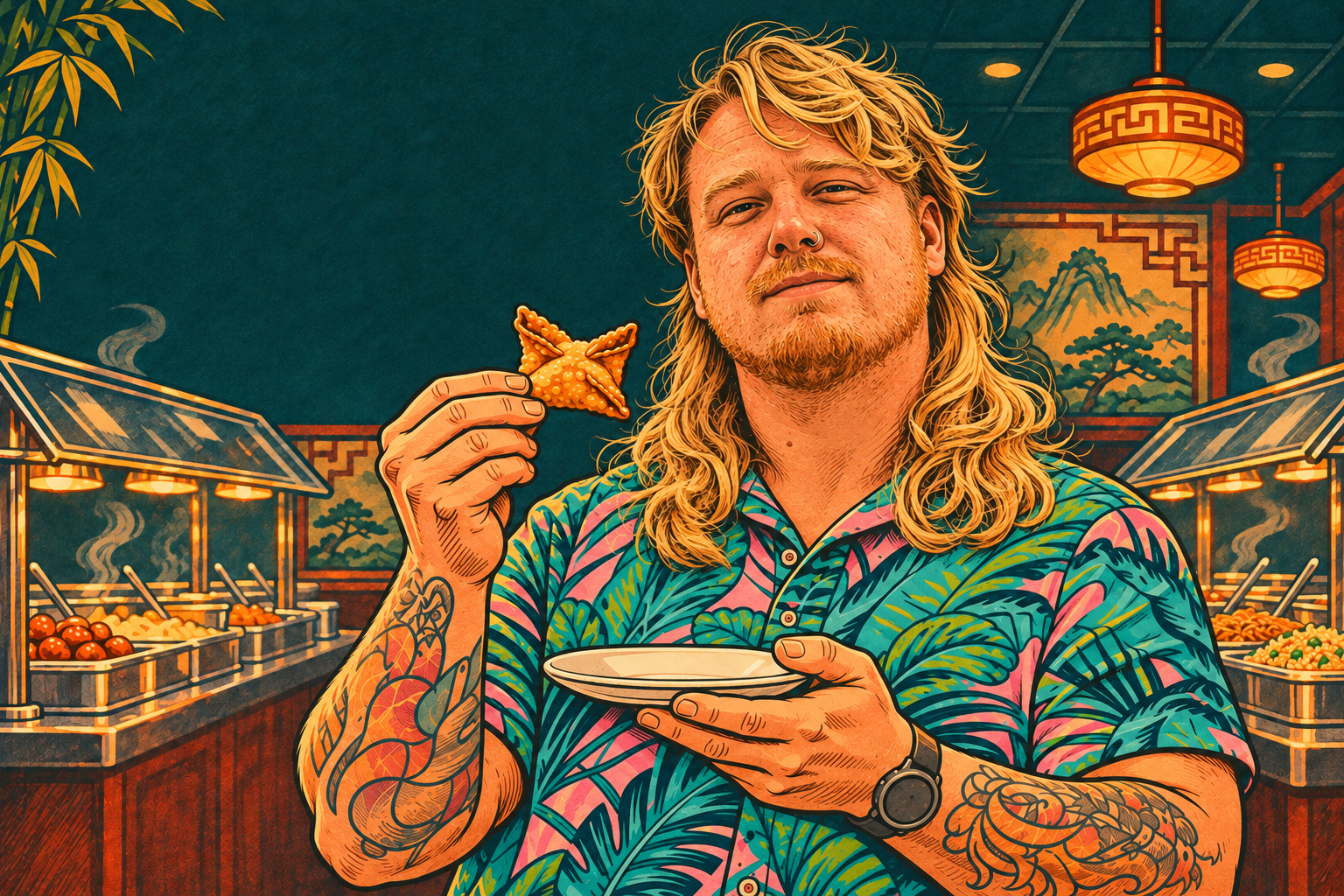
Elliott is a postal worker from the Cincinnati area, a Milford native who has carried a Loveland route for seven years. The work taught him the local restaurants, and he started posting about them when he decided fast food cost too much for what it was. In the spring of 2026 he started the series that made him famous: "Eating at Every Chinese Buffet I Can Until I Get Food Poisoning."
The format is consistent. He opens by announcing the buffet's Yelp rating, samples the food, the dining room, the offerings in the gumball machine, the stickiness of the bathroom floors, and grades the visit out of five stars. The crab rangoon gets its own verdict every time: if it is good, he is goonin’. By the end of September 2026 he had passed 100 buffets and 1.2 million followers on TikTok, and he still had not gotten food poisoning. "If anything, I've just been using the bathroom a lot more than usual," he said in one video. In 2025 his post about Lori's crab rangoon cheese sticks went viral, and someone messaged him on a Saturday to say Lori's had sold out for the first time ever, with cars backed up on State Route 28.
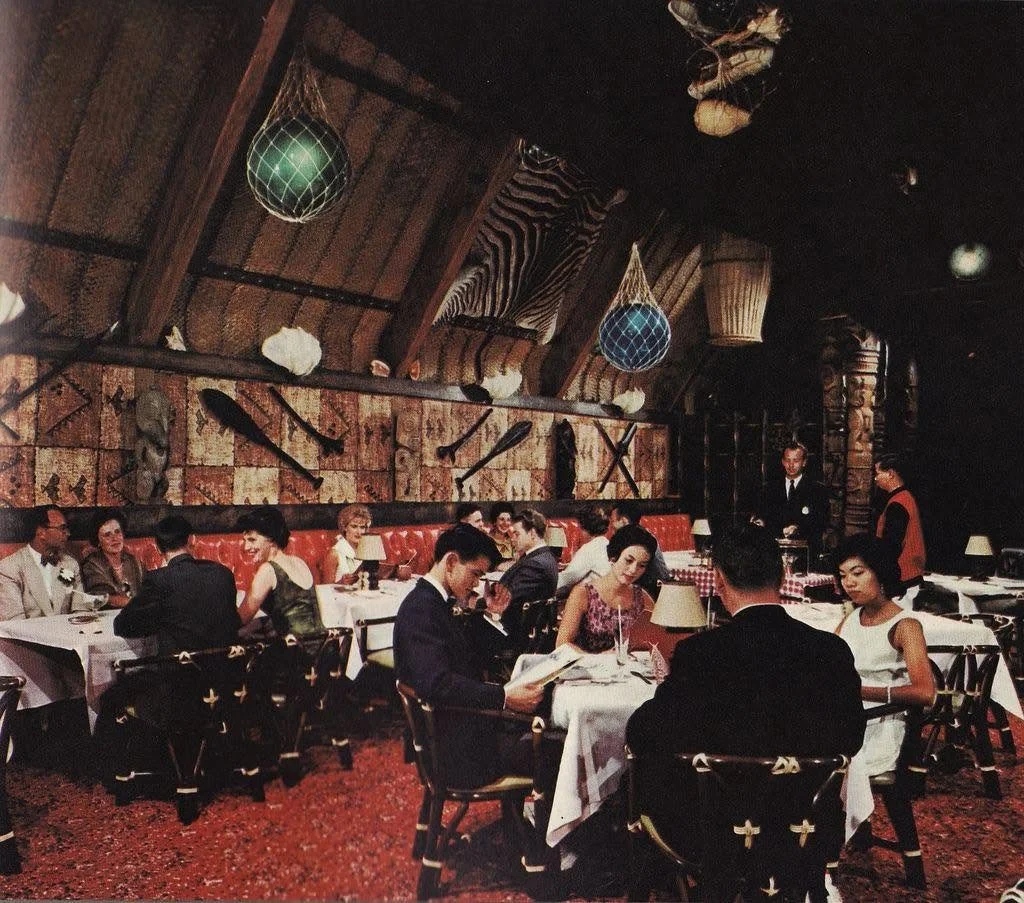
The dish, though, has always been a stranger story than its menu placement suggests. Crab rangoon was on the menu at Trader Vic's in Beverly Hills in 1955, and in San Francisco by 1956. It was probably invented in the United States by Joe Young, a Chinese-American chef working under Victor Bergeron, the founder of Trader Vic's. It was named for Rangoon, now Yangon, though neither Burma nor China has a tradition of frying cream cheese in wonton wrappers. The dish is a tiki-era American invention: a crisp wonton, a creamy filling, a sweet sauce, and an exotic name. For 70 years it lived on takeout menus, at some point imitation crab becoming the standard in the filling.
Trader Vic’s
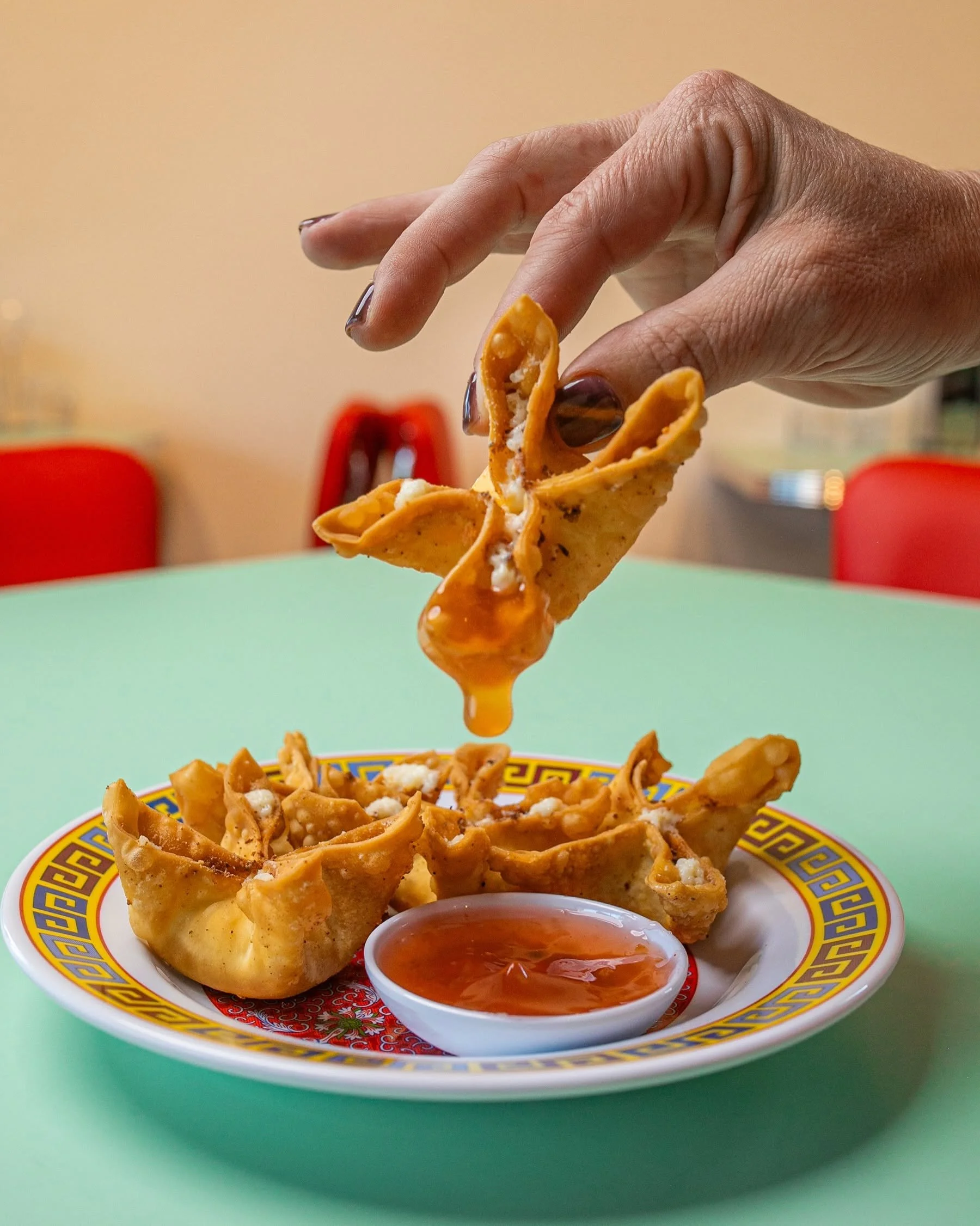
The new, chef-driven versions can now be found coast-to-coast. In Asheville, The Majestic serves five crab rangoon for $9, filled with cream cheese, crab, and scallions, with duck sauce on the side. It is a polished Chinese restaurant by a serious chef.
The Majestic
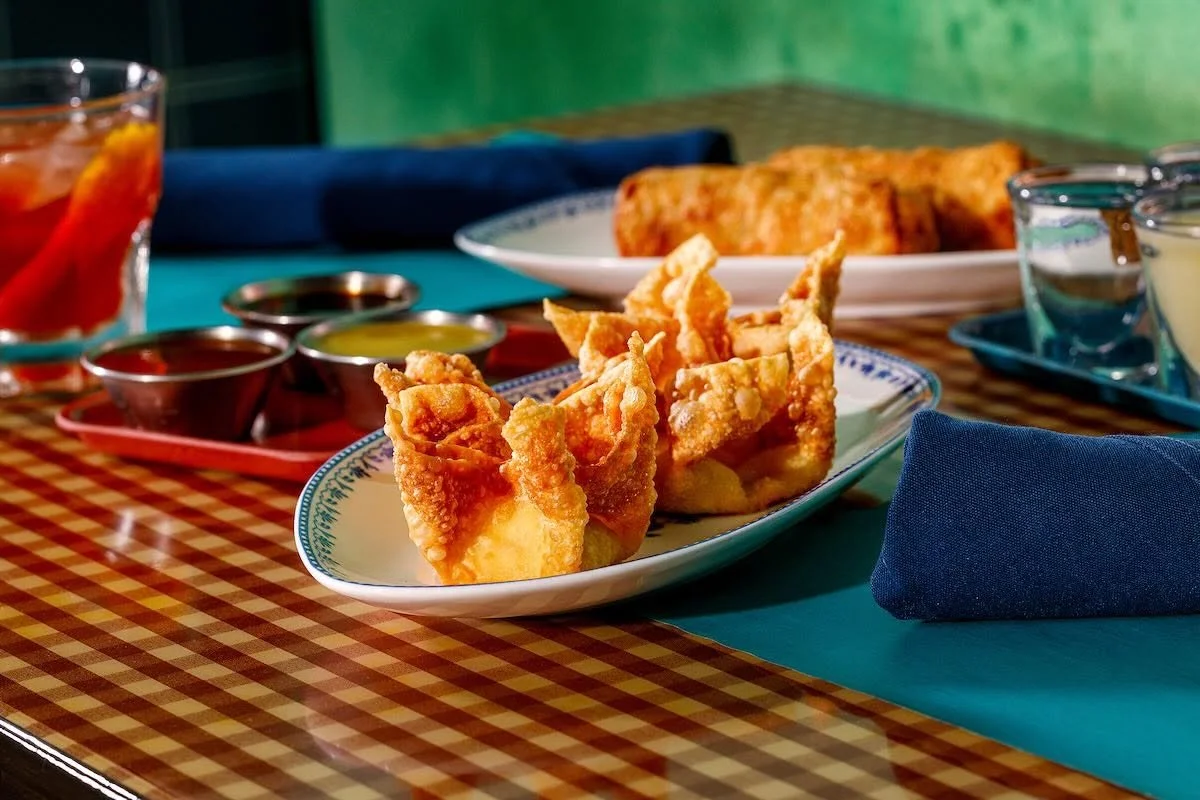
Chef’s Special
In Chicago, Chef's Special, a cocktail bar in Bucktown with a Bib Gourmand rating from the Michelin Guide, sells crab rangoon for $11.50. The wrappers are dusted with mushroom powder, and they come with a pineapple, vinegar, and orange sweet-and-sour sauce. Some taste testers, notably, say they prefer imitation crab.
In Charleston, Beautiful South, a Cantonese restaurant, sells an $18.95 crab "rangoon." It’s blue crab whipped with cream cheese, served as a shareable dip with wonton crisps and a sweet chili gastrique.
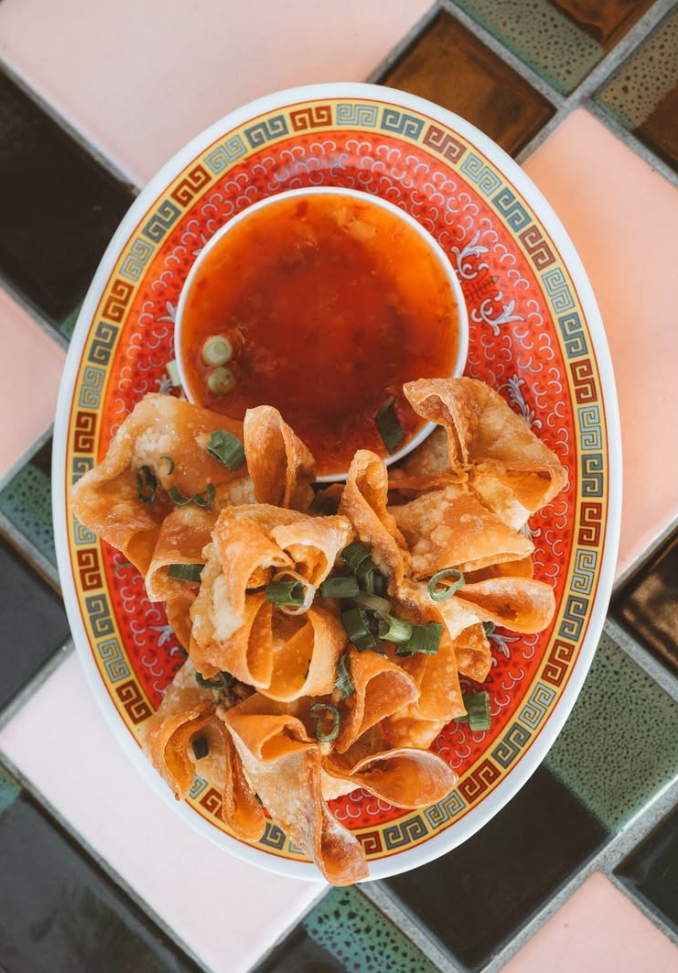
Fortunate Son
In San Diego, Fortunate Son keeps it closer to the original: cream cheese, green onion, and sweet chili sauce. In Goshen, Ohio, Lori's sells crab rangoon sticks for $10, the rangoon filling mixed with mozzarella, coated in panko, and served with sweet red chili sauce.
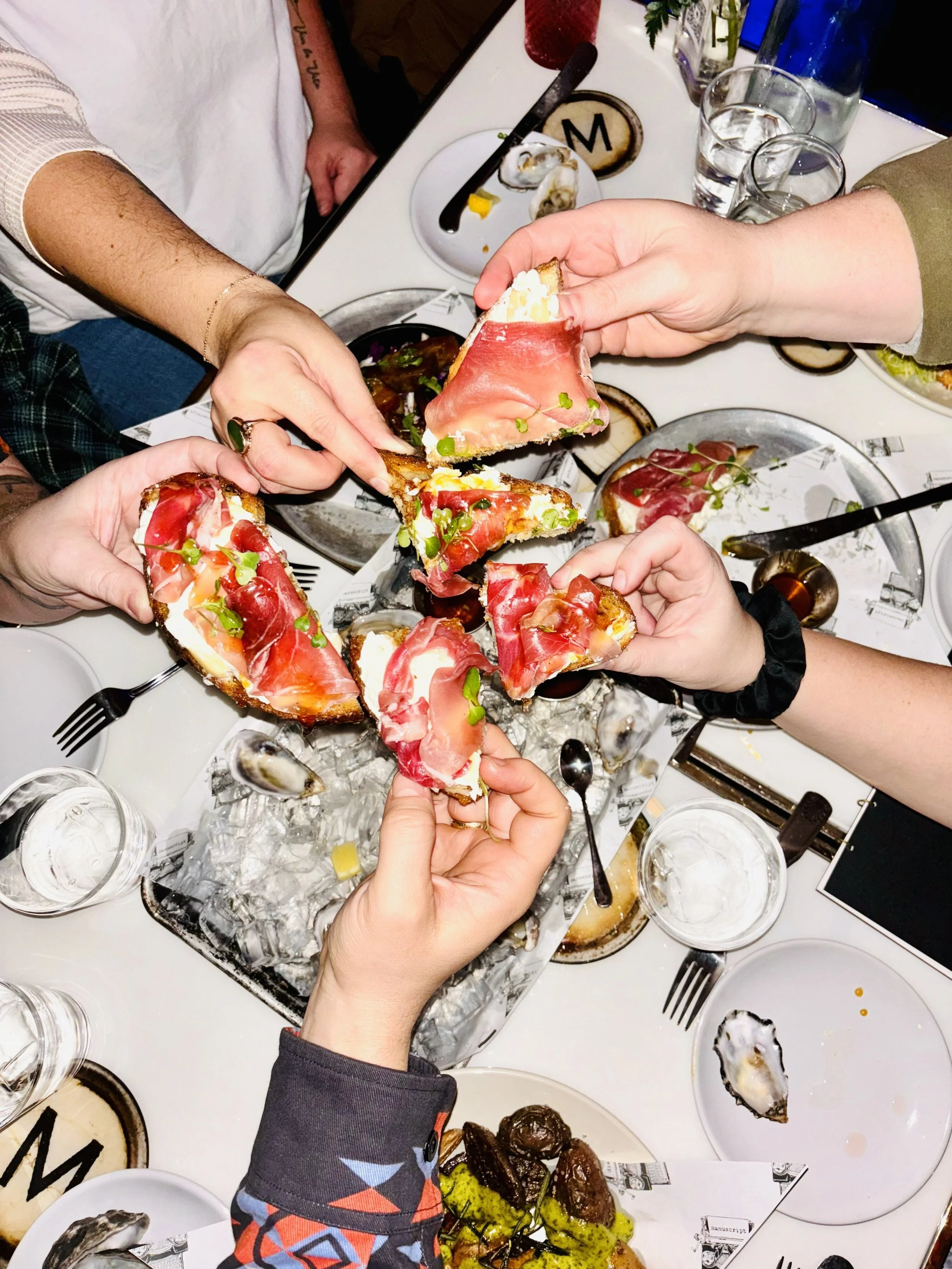
In Columbus, Ohio, Sage serves its crab rangoons alongside live music. Chef David Kim's version uses real crab meat, the restaurant says on Instagram, and the rangoons arrive with a dipping sauce, a lemon wedge, and edible flowers. It is the rare rangoon that shares the bill with a band.
And in Des Moines, East Meets West Kitchen & Bar, which opened Nov. 3 in the old Motley School Tavern space in Beaverdale, puts crab rangoon on a menu with wings, burgers, banh mi, and Korean crispy chicken. The rangoon arrives with crab and cream cheese, with sweet chili sauce, exactly as it should be.
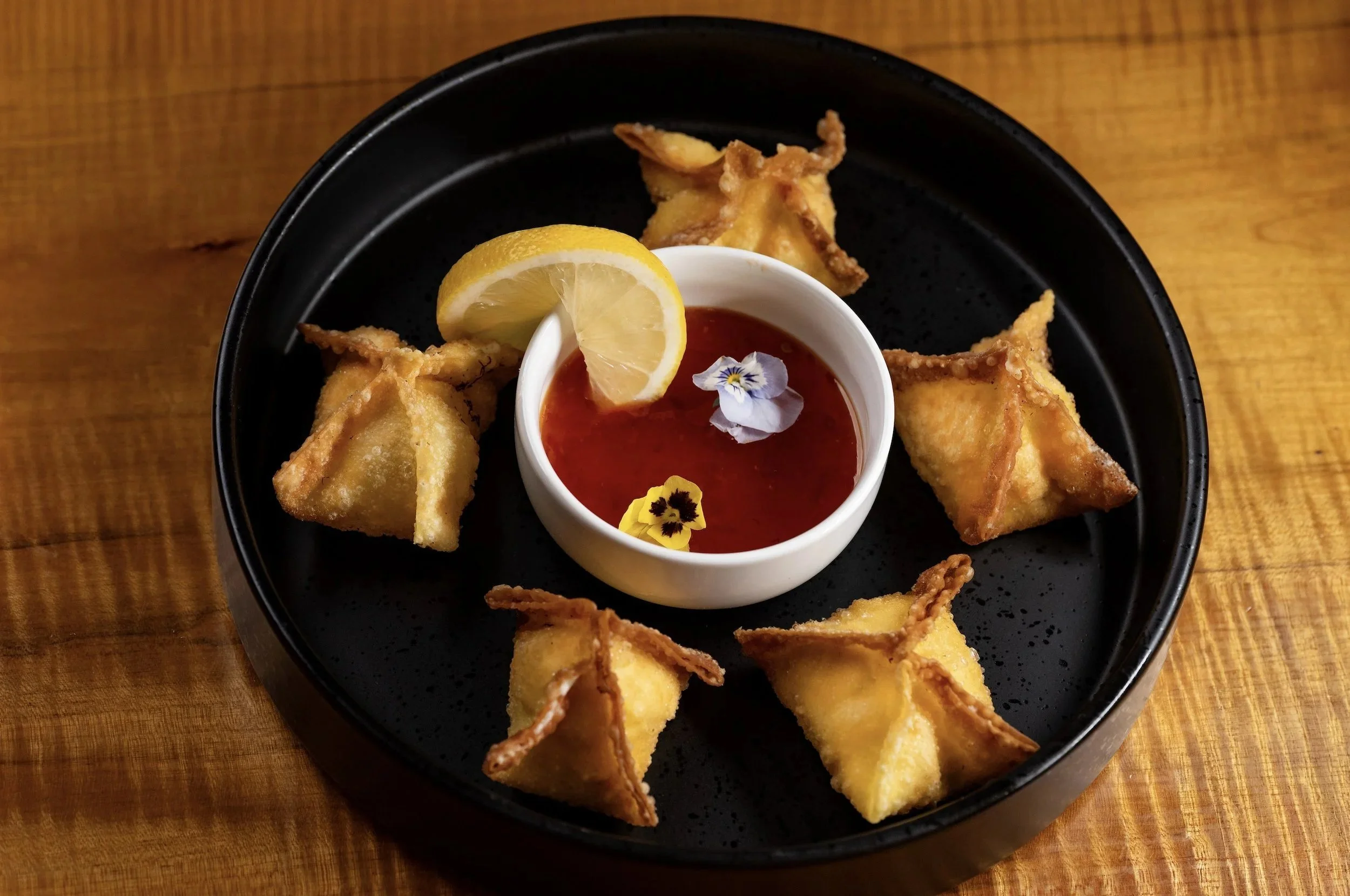
Sage
That is the pattern: Nobody is pretending crab rangoon came from an ancient Chinese recipe. The chefs picking it up now are taking a Chinese-American creation and treating it seriously, with better crab and better technique. Not once in the description of any of these dishes will you see the word “deconstructed.”
Which brings us back to Elliott, whose rangoon expertise arrives without credentials, in a mullet, grading wontons and mayo-stuffed mussels and reheated Totino’s pizzas out of five stars. Restaurants have noticed, because a mailman who has eaten at 100 buffets and kept going has something the guidebooks do not: proof of work, in public, one rangoon at a time.
The dish and the man suit each other. The things we love without pretending otherwise tend to last longer than the things we were told to admire.

The Most Expensive Vegas Meals Might Cost You the Rent
In a city built to separate you from your money, these 10 dinners can do the job before you reach the casino.

St. Augustine’s Best Restaurants Aren’t Stuck in the Past
In a Florida city built around preservation, independent kitchens are very much in the present tense.