PROFILES | PENNSYLVANIA
Saif Manna’s Palestinian Pastries Tell a Family’s History
At his Philadelphia bakery, Saif Manna is finding new forms for the Palestinian food he grew up with—and a home for the people who come to eat it.
By Maria Rodriguez
Photos by Michael Persico
Oct. 1, 2026
AUTHOR BIO: With a day job that requires constant travel, Maria Rodriguez is likely a regular at your favorite restaurant. She’s reviewed restaurants since 2007 in magazines from Spain to Seattle.

Before Saif Manna had an actual bakery, he had an apartment he did his best to turn into one. During Philadelphia winter days, as his baking business outgrew its makeshift beginnings, he’d use the building’s roof as a makeshift walk-in fridge. He baked through long nights, hauled pastries to farmers’ markets, and fed people willing to stand in line for what he made. A proper bakery would come later.
“I will find a way, no matter the circumstance,” he says.
That determination now has a permanent address. Manna Bakery opened its first storefront in Philadelphia’s Fishtown neighborhood this summer, giving the chef’s Palestinian and Levantine baking a home after years of pop-ups and farmers’ markets.
His pastries draw on two grandmothers with very different ideas about feeding people, a father who let him help with breakfast, and a family history in which recipes could preserve something displacement threatened to take away. The bakery is his way of carrying that inheritance forward, sometimes in forms his grandmothers wouldn’t recognize.
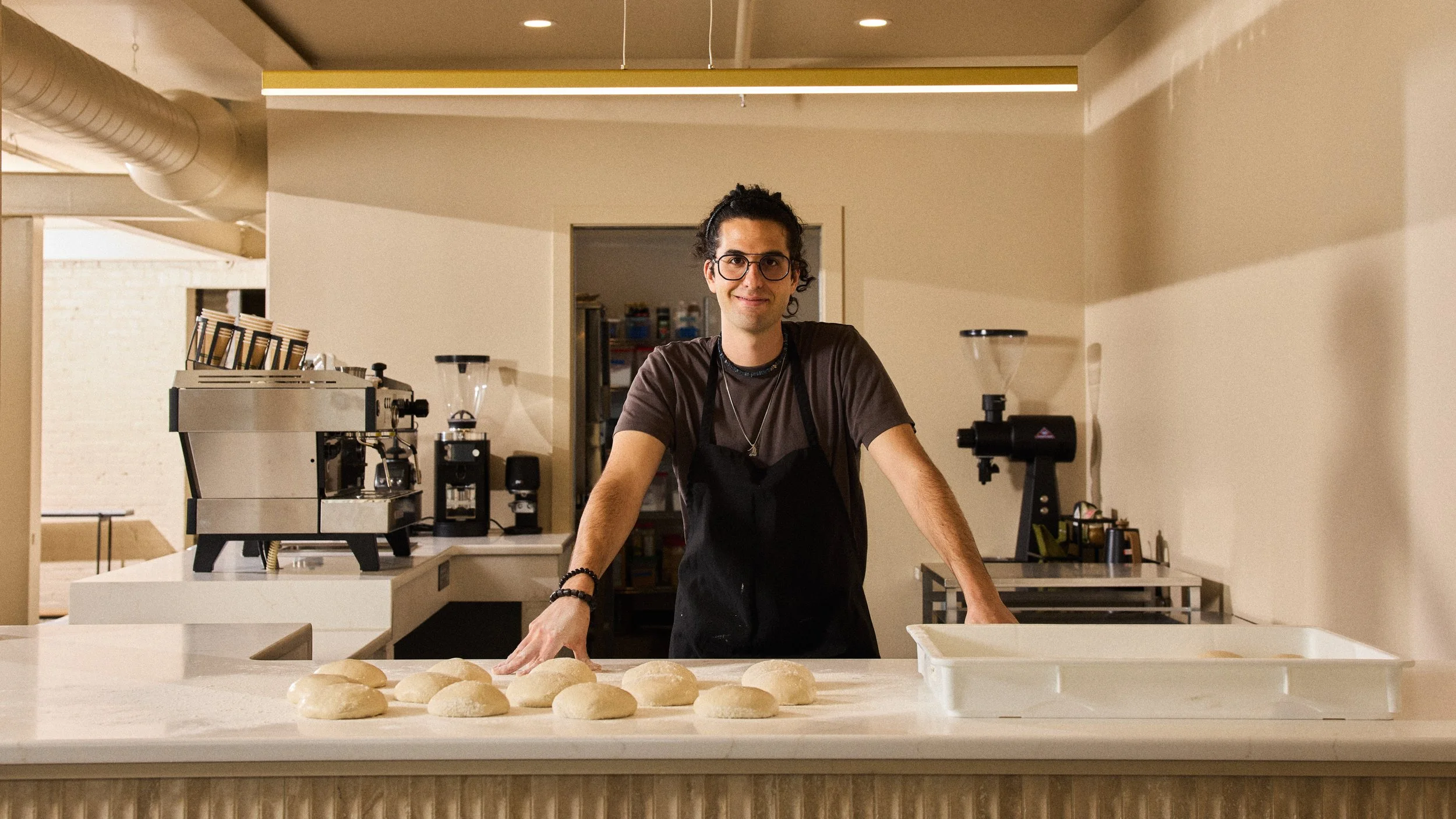
Manna
Manna grew up in Dubai, spending summers with his grandmothers, Samira and Siham, in Jordan. At home, his father made weekend pancakes and omelets, giving him eggs to crack, batter to whisk, and eventually pancakes to flip. At eight, Manna made tomato sauce for his younger brother and discovered he could be the one doing the feeding. By 15, he was cooking lunch and dinner for the family and reading his grandmother’s recipe book.
Samira’s kitchen offered an education in scale. Visitors got Turkish coffee and date cookies made with olive oil from the small family farm, followed by an invitation to lunch at 3 p.m. Children, grandchildren, neighbors, and friends of friends gathered around the table. If there were too many, she brought out another table. She made jams, pickles, and cheese herself. Manna asked questions until, sometimes, she kicked him out of the kitchen.
Siham’s cooking required a different kind of investigation. He would find her at the counter, her back to the door, and try to identify what she was making by its smell before peeking over her shoulder. Her quantities were smaller, her preparations sometimes intricate. “She taught me that food doesn't have to be abundant to be generous,” he says.
For his Palestinian family, scattered across the Middle East after the Nakba, those meals carried more than the usual childhood associations. His grandfather told him about the food, sights, and experiences of his homeland. Manna could encounter that place through what the family cooked, even while growing up elsewhere. “I ate Palestinian food to travel to my homeland through the emotions and experiences it invoked.”
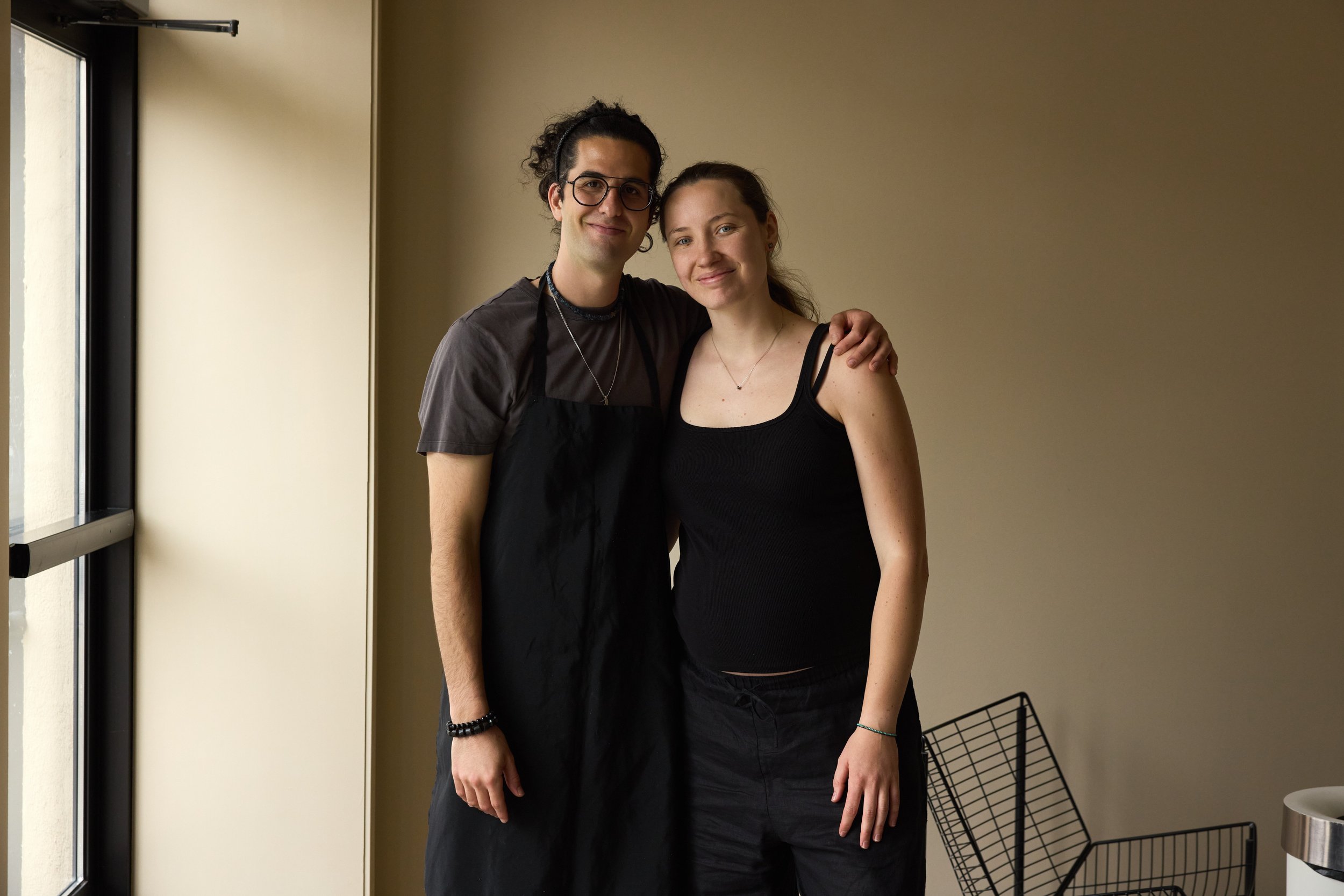
Manna and Surikova
In 2019, he moved from Texas to Philadelphia to attend Temple University and play tennis. He began baking for his girlfriend, Stefaniya Surikova. They bonded over food: he showed her the recipes he posted on Instagram and offered to cook for her. She requested fresh bread, cured salmon, and herbed butter; he got around to making that meal three years into their relationship. Cookies proved a quicker proposition, and she urged him to sell them to fellow students. The business expanded to pop-ups and farmers’ markets, and his recipes increasingly drew on the Palestinian flavors he knew from his grandmothers’ kitchens.
Without formal culinary training, he learned through batches that went wrong: collapsed recipes, disappointing textures, ideas that worked in his imagination and failed on the plate. His response was to keep asking why. “You have to make average food before you can make great food,” he says.
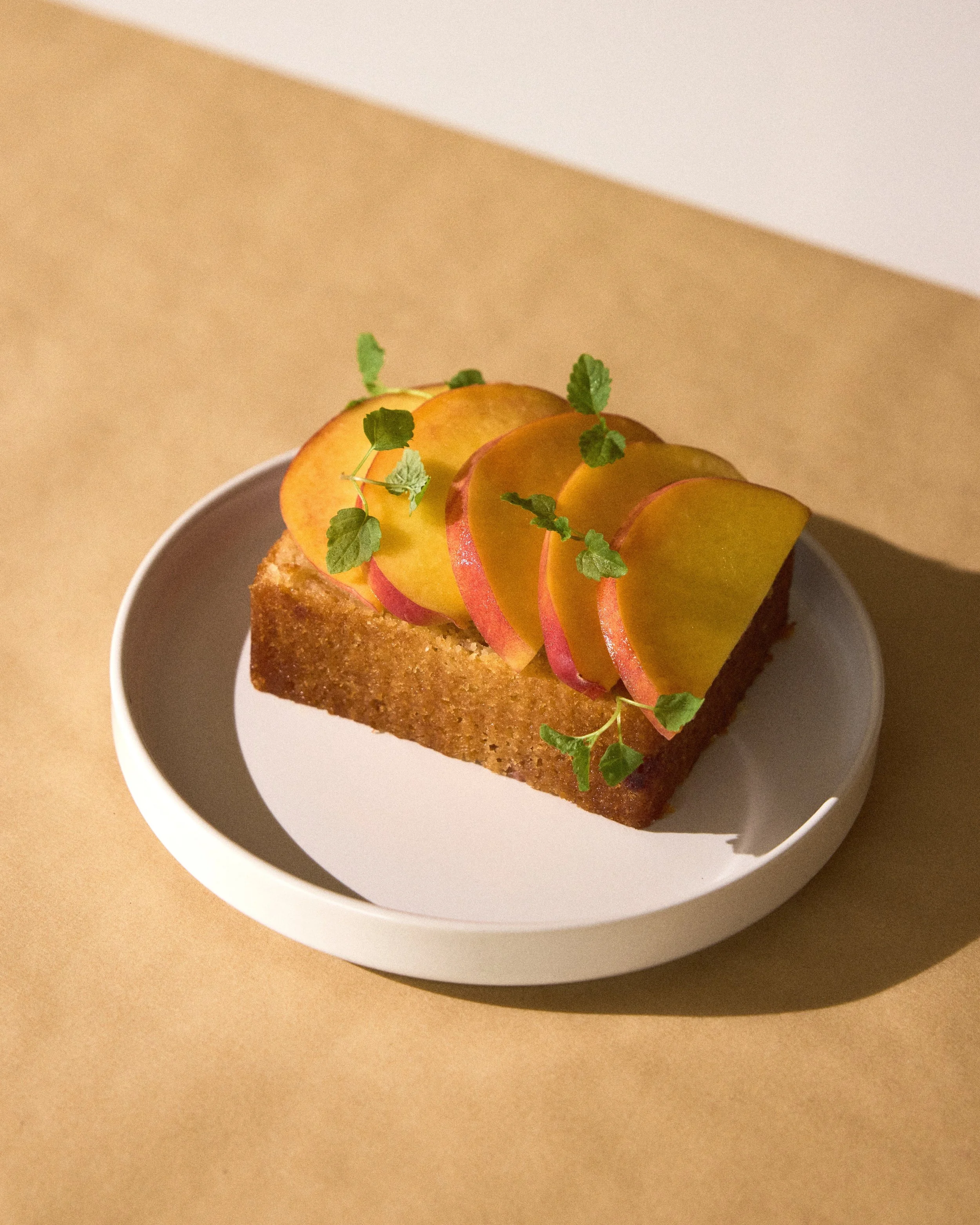
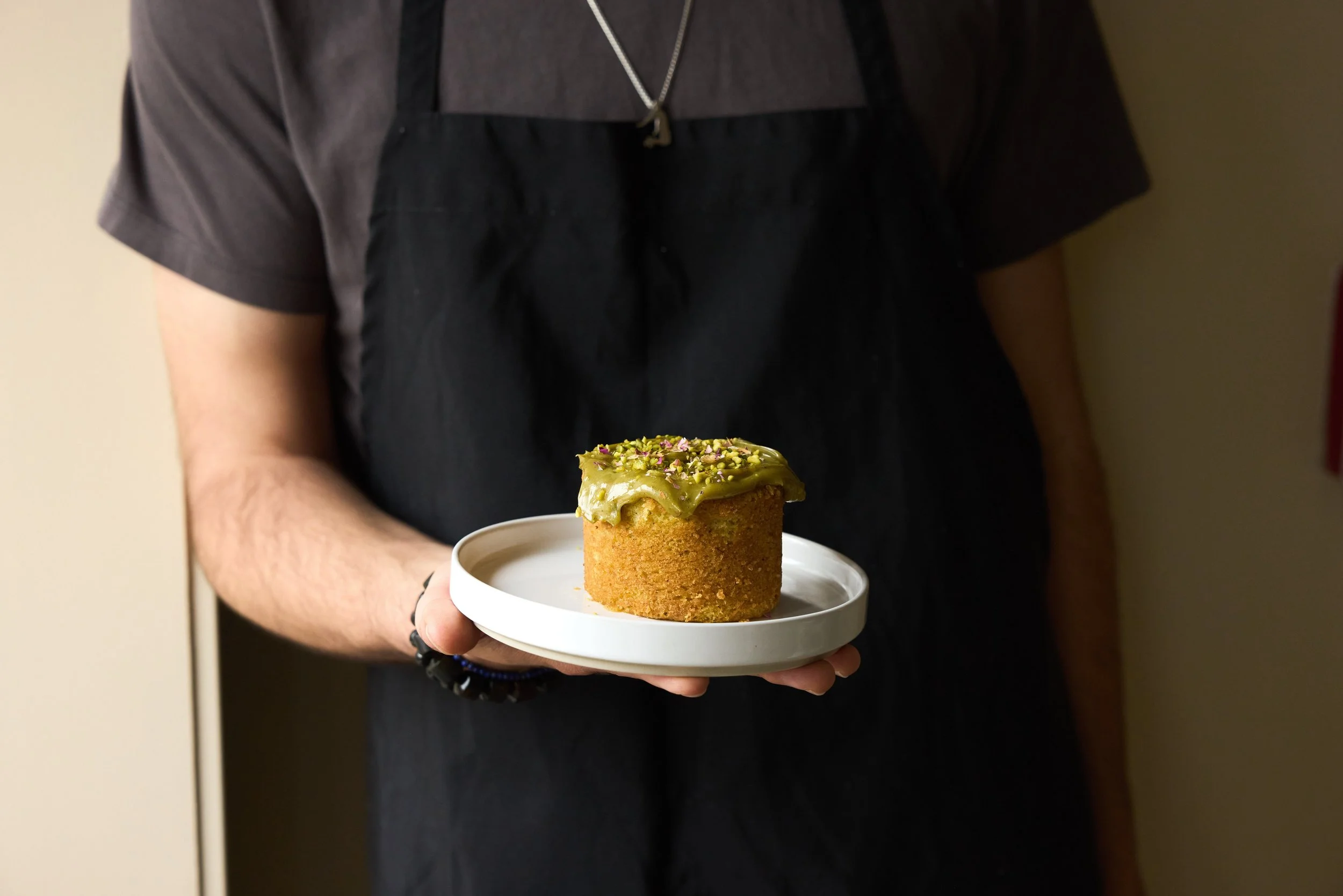
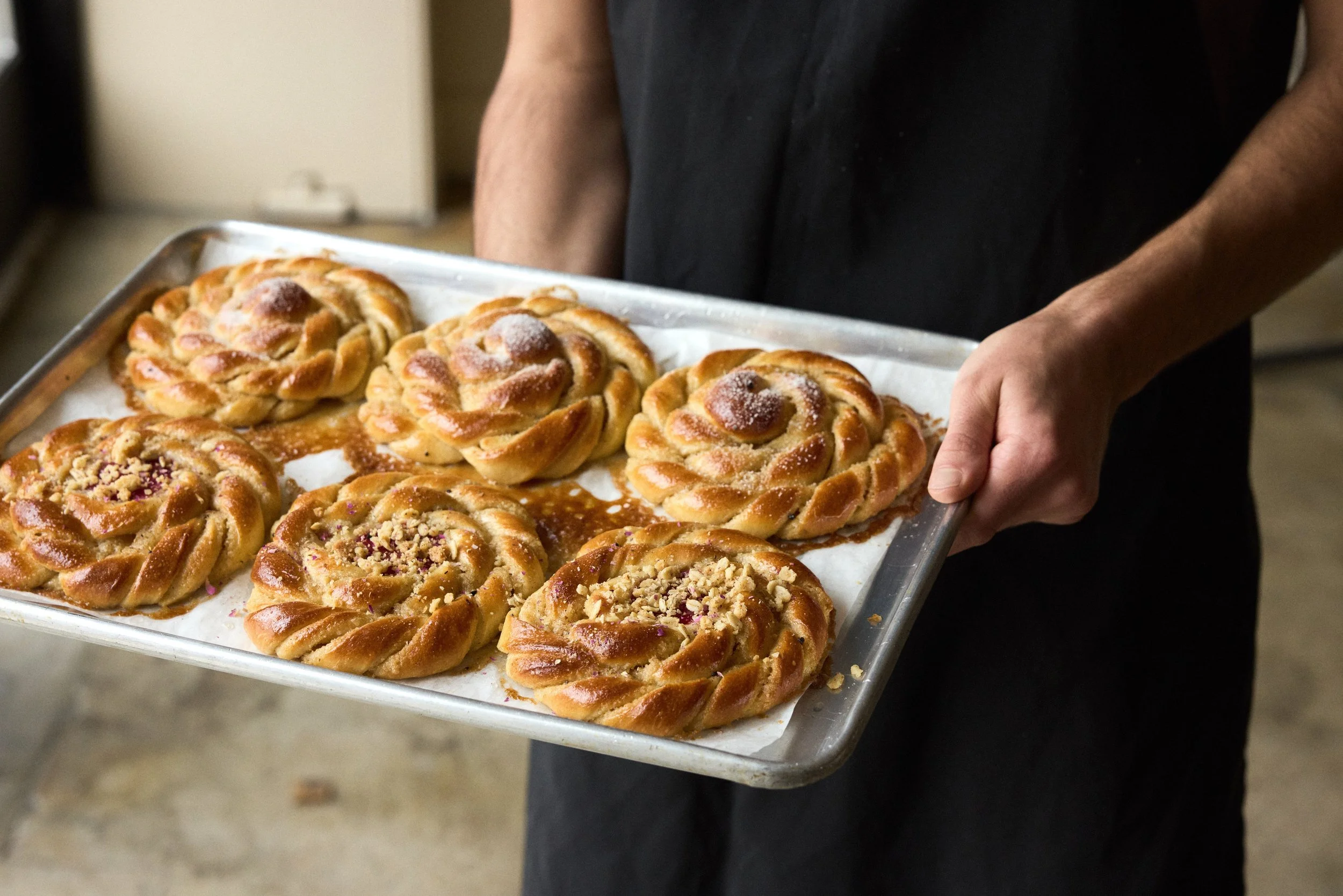
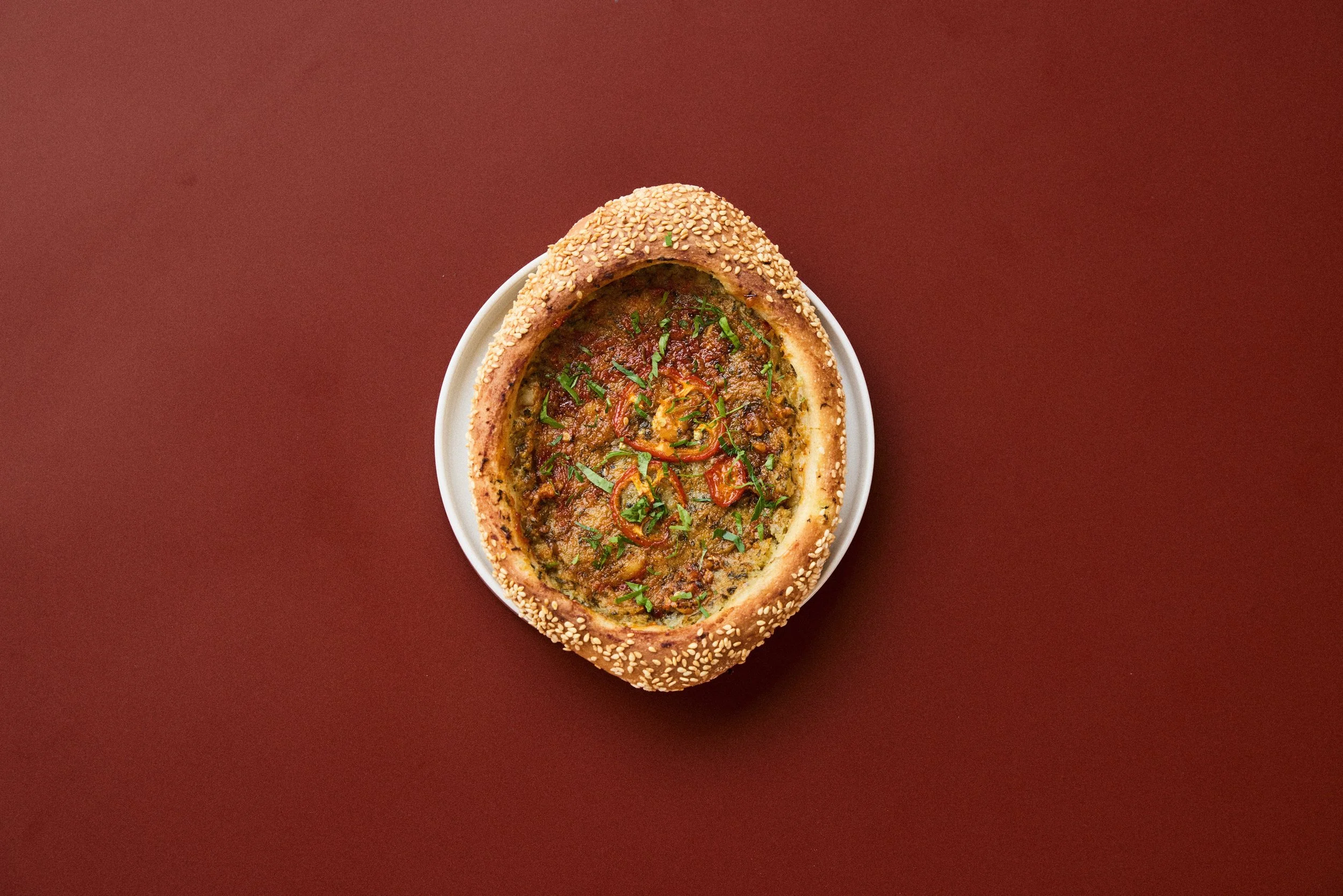
The resulting repertoire includes cardamom buns, herbed cheese fatayer, and rose and pistachio shortbread. For musakhan, his thinking begins with sumac, olive oil, onions, taboon bread, and the way people share the dish. Before changing its form, he wants to understand what makes it meaningful. The question he asks himself is direct: “Am I changing the dish because I have something meaningful to say, or am I changing it just to make it different?”
Opening the bakery came amid major life moments for Manna. In 2026, after working alongside Surikova selling his baked goods in farmers’ markets, they married. Then, two months before the bakery was to open, Manna’s father died. He has also become a father himself. Through those ups and downs, he’s learned to not only look back at his family history but to appreciate today. “I want to be ambitious, but I also want to be present,” he says. “I want my children to see me chase big dreams, but I also want them to see me enjoying the life I'm building.”
For now, he has built a place where unfamiliar flavors can become somebody’s favorites and familiar ones can bring somebody home. There is something of Samira’s extra table in that accomplishment. “I started Manna because I wanted to make food,” he says. “I’m proudest that we ended up making a home and a community space.”
Eat Like a Vegas High Roller on a Low-Roller Budget
Skip the four-figure tasting menus for fresh tortillas, grandma-style pizza, West African cooking, oysters, and one of America’s most celebrated Thai restaurants.