NEW YORK | MIAMI
David Chang’s Miami Expansion Is About More Than Fried Chicken
By Eric Barton | March 6, 2026
AUTHOR BIO: Eric Barton is editor of The Adventurist and a freelance journalist who has reviewed restaurants for more than two decades. Email him here.

The first good bowl of ramen I had was 20 years ago, at David Chang’s first restaurant, Momofuku, down in the East Village. I sat at the bar alone, and that first spoonful of broth was so good, so rich with pork fat and slow-simmered bones, that I actually said to the stranger next to me: “Oh my god.”
I mentioned this to Chang the other day. It would’ve been easy for him to take a victory lap, boast about the house-made noodles or all that goes into the tonkotsu broth. But no. “We’re just grateful for the opportunity,” he said, and then, almost immediately, he swerved away from nostalgia. “But honestly, we try not to dwell on it too long. We’re more focused on what’s next.”
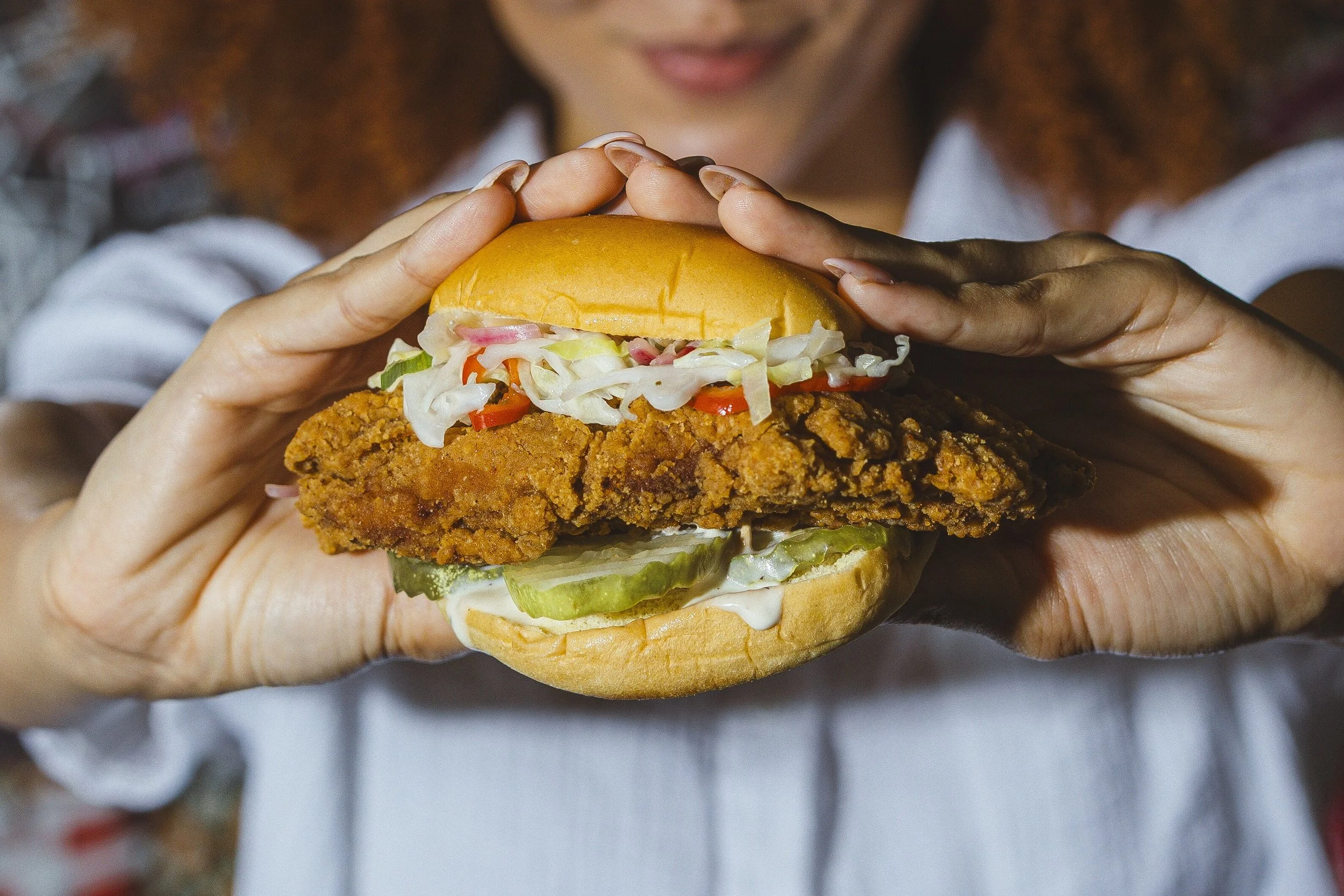
What’s next is Miami, and it comes in the form of a fried chicken sandwich. Chang’s quick-service concept Fuku in Coral Gables on Miracle Mile is the first of two in South Florida, with a second planned for West Palm Beach later this year. The move is part brand expansion, part stress test: New York made Chang a force, but Miami is not in the business of handing out lifetime achievement awards. The real question is whether Fuku can duplicate the kind of obsessive loyalty Chang’s food inspired up north, in a market already crowded with chicken shops, hype cycles, and diners who take pride in acting unimpressed.
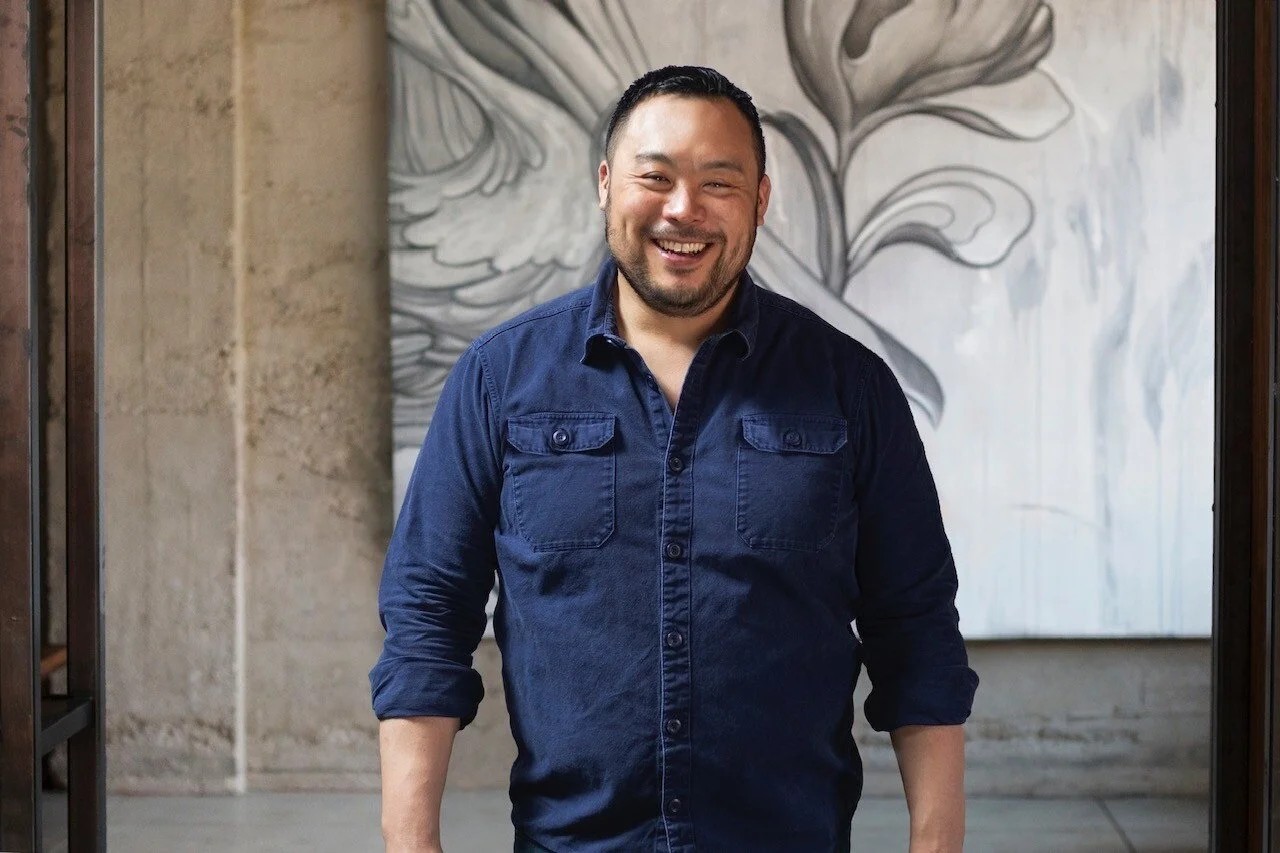
Chang, now one of the most influential American chefs of the last two decades, built his reputation by turning casual food into something that felt important. He opened Momofuku Noodle Bar in New York City in 2004, then kept building: more restaurants, more styles, more arguments about what counts as “authentic,” and a whole generation of chefs who watched him prove that serious cooking could happen in a space that did not demand everybody talk in a whisper. He collected major awards, including James Beard wins, and his fine-dining outpost Momofuku Ko became a two–Michelin star symbol of a certain New York era, one that Chang himself eventually outgrew when Ko closed in 2023. Along the way, he turned into a media figure without turning into a mascot, hosting television shows and co-founding Lucky Peach, the kind of food magazine that made chefs feel like the audience instead of the subject.
Fuku’s own origin story is less about reinvention than about focus. The brand began as a “secret off-menu item” at Momofuku Noodle Bar and grew into a nationally recognized concept with 15 outposts, many of them in stadiums and arenas. The South Florida location is a shift back toward what Chang considers the “real” version of the idea: a place built for repeat visits, not halftime.
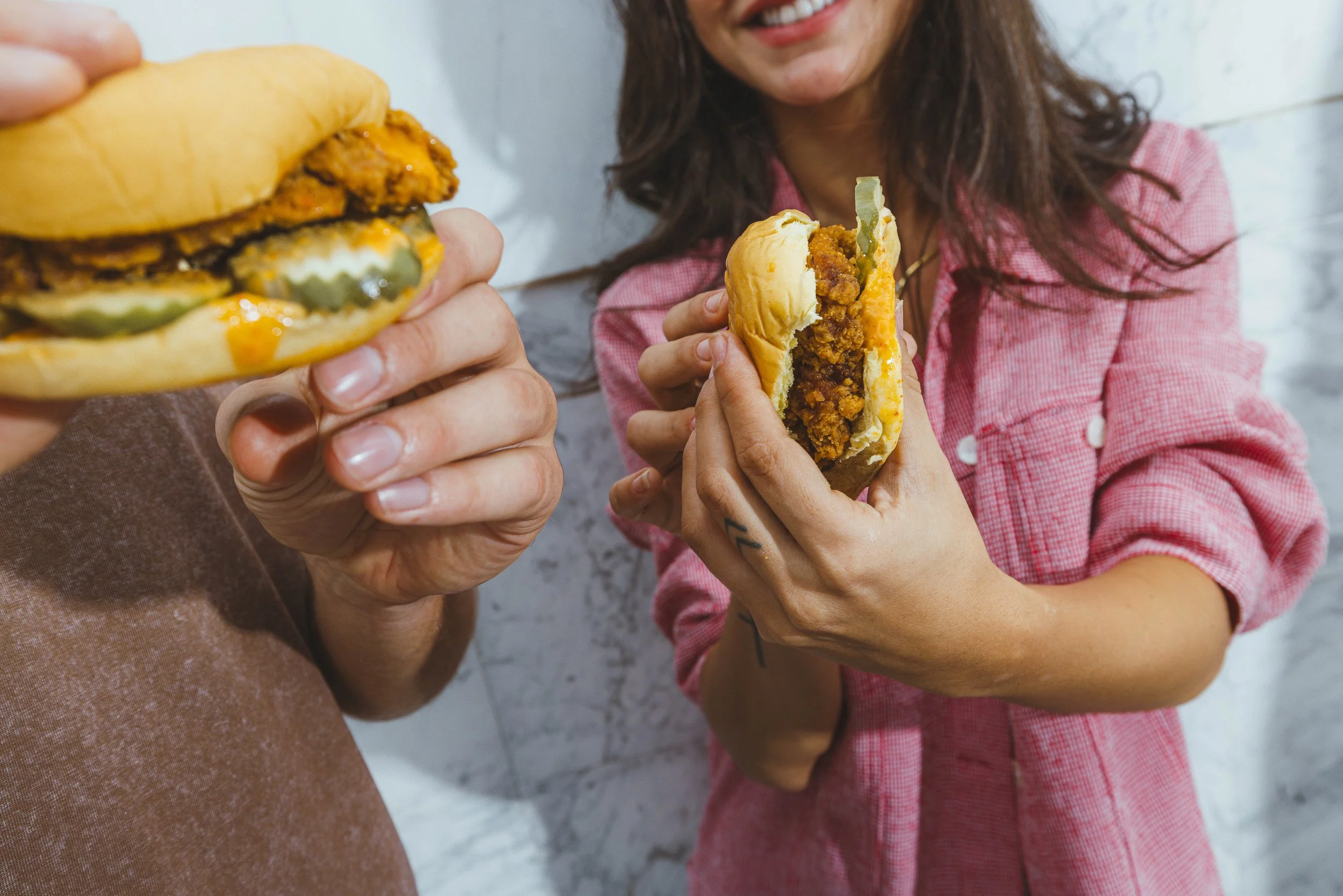
Chang framed Miami as the logical next step, not a whim. “Non-traditional venues are deeply rooted in our origin story,” he told me. “Shortly after Fuku opened in New York in 2016, Madison Square Garden invited us to open a location there, and we’re still there today.” He pointed to the brand’s time at Hard Rock Stadium and Inter Miami CF’s stadium, and he said the performance there made demand hard to ignore. “Given that history, plus the growing New York-origin population, and the market’s diversity, Miami felt like the right next step.”
The timing, he said, is also about getting back to fundamentals after a period of scaling. “The chicken category keeps growing,” Chang said, and he described a stretch where Fuku leaned into sports venues and big events. “We’ve spent the last couple of years refreshing the brand, the restaurant design, and simplifying the menu. Now feels like the right moment to get back to what we do best, which is operating actual restaurants where people can experience Fuku the way it was meant to be.”
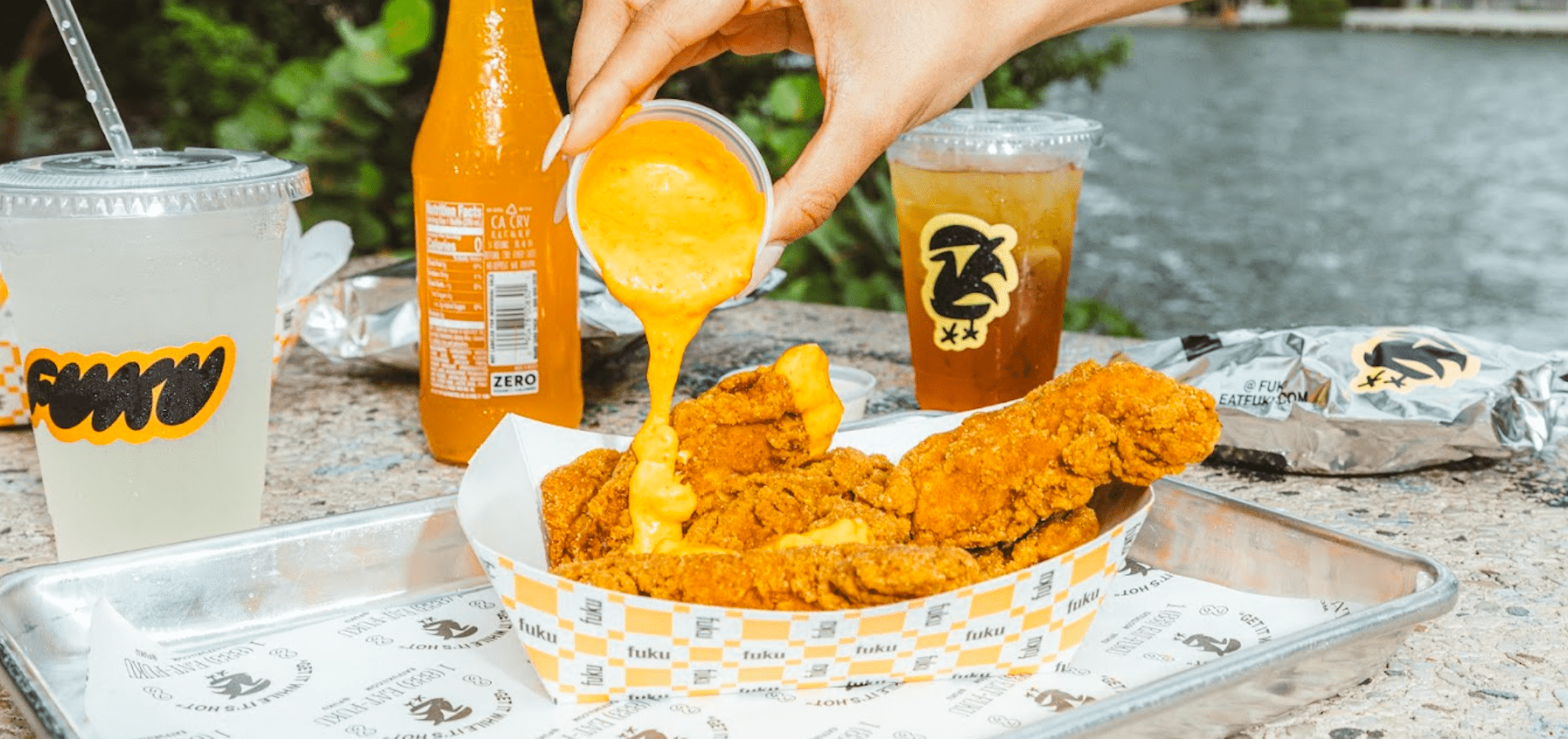
The Coral Gables menu is built around spicy fried chicken sandos, plus tenders, waffle fries, sides, and dessert collaborations with Milk Bar and Coconut Grove’s Key lime pie experts Fookem’s Fabulous.
For Chang, the defining challenge is the one that’s always tough to duplicate. “It starts with a standard we don’t compromise on,” he said. “The internal compass is simple: if it wouldn’t fly at Momofuku, it doesn’t fly at Fuku,” he said. “Fast doesn’t have to mean bad. We’re a collection of food people who genuinely believe the simplest food is often the best.”
Miami is the proving ground. “We’re focused on Florida for now, with an eye toward broader expansion as we continue to refine the model,” Chang said. West Palm Beach is next, with additional Miami locations and Fort Lauderdale under consideration. He also acknowledged the next inevitable phase for any brand that survives its own momentum. “There’s also growing inbound interest in franchising,” he said, “and once we’ve got the restaurant experience exactly where we want it, we’ll be ready to share that playbook with the right operators. The goal is an authentic, bold food experience that travels. We think Fuku does that.”
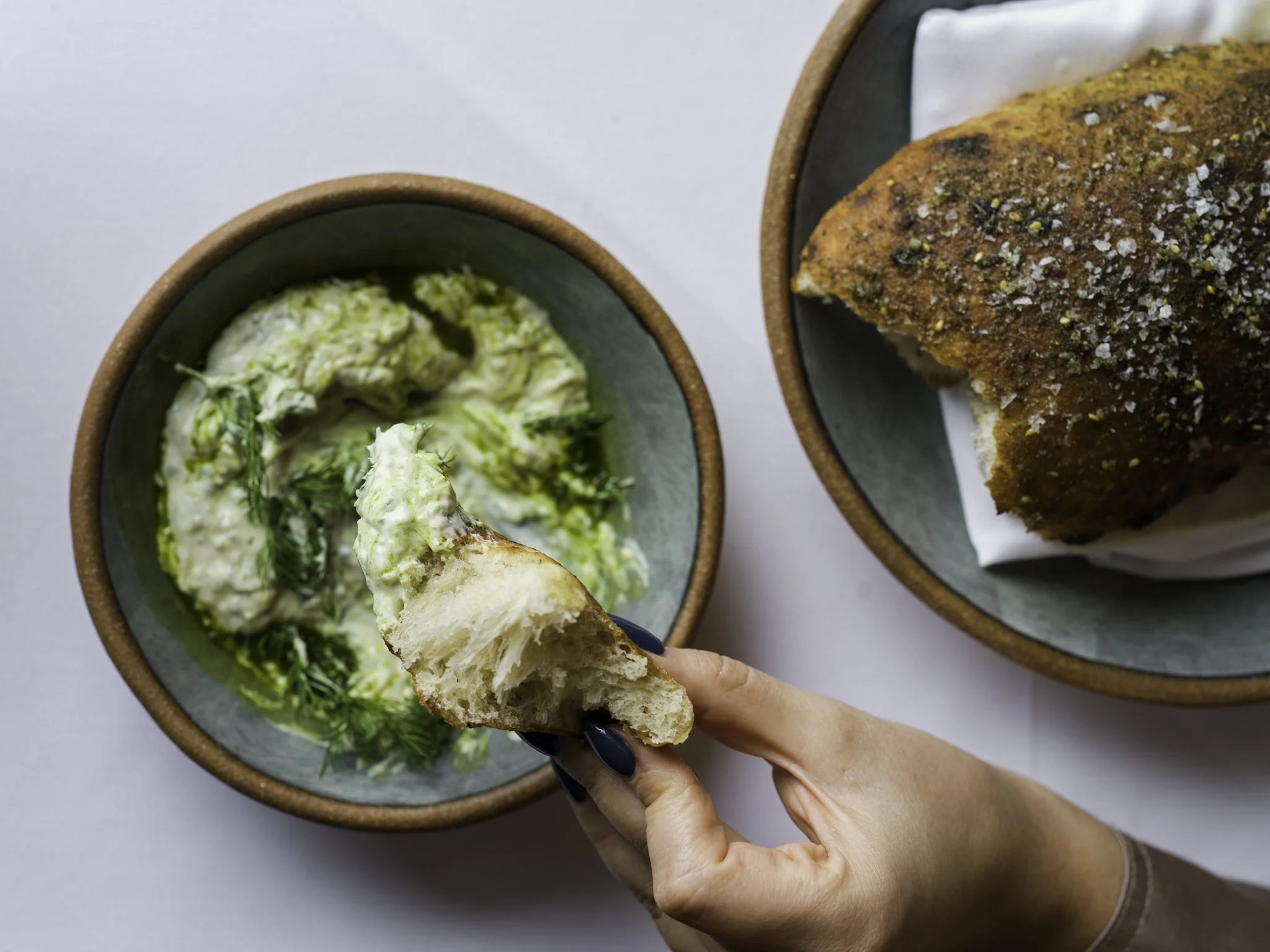
Andrew Bazzini Is Running Miami’s Best New Restaurant
Andrew Bazzini, the New York–trained talent leading Fooq’s return—uses wood fire, Persian notes, and a glamorous dining room to create the city’s best new restaurant.

Baltimore Michelin Guide: The Star-Worthy Restaurants in Charm City
If the Michelin Guide covered Baltimore, these are the restaurants that would earn stars and Bib Gourmands.

At Spinasse in Seattle, Stuart Lane Turns Piemonte Into a Life’s Work
Spinasse chef Stuart Lane rose from Edmonds to Piemonte and back, shaping Seattle’s Italian dining—and documenting it in a coming cookbook.