RESTAURANT NEWS | MIAMI
Gold Standard's Roving Omakase Lands in Miami Beach
The roving omakase pop-up returns for its seventh residency, with a 12-seat counter and fish flown in from Japan.
GOLD STANDARD | MAP | INSTAGRAM
By Eric Barton
6:01 a.m. ET, Nov. 25, 2026
AUTHOR BIO: Eric Barton is editor of The Adventurist and a freelance journalist who has reviewed restaurants for more than two decades. Email him here.

The fish arrives from Tokyo’s Toyosu Market, the counter seats 12, and the playlist leans old-school hip-hop. Gold Standard, the roving omakase pop-up, returns December 2 in Miami Beach, Florida, moving into the Living Room Bar for its seventh residency.
Gold Standard started in 2019 as a private lounge inside the Versace Mansion, where co-creators Bill Spector, Gil Elbaz, and Anthony Romano spent two years refining the omakase before taking it on the road. Since then it has settled, for a season at a time, into Soho Beach House, the Ritz-Carlton Bal Harbour, the St. Regis Bal Harbour, Whitman’s, the Bath Club, and most recently Le Basilic. The new stay runs through the 2027 season.
The meal is led by Ronnie Jariyawiriya, who trained at Nobu, Makoto, and Wabi Sabi before joining Gold Standard, alongside sushi chef Soren Mendoza. The menu changes daily around the fish flown in from Japan, and the new residency serves a 15-course omakase, alongside an expanded à la carte menu. Jariyawiriya says the menu evolves constantly rather than changing all at once, so returning guests get new progressions alongside the signature pieces.
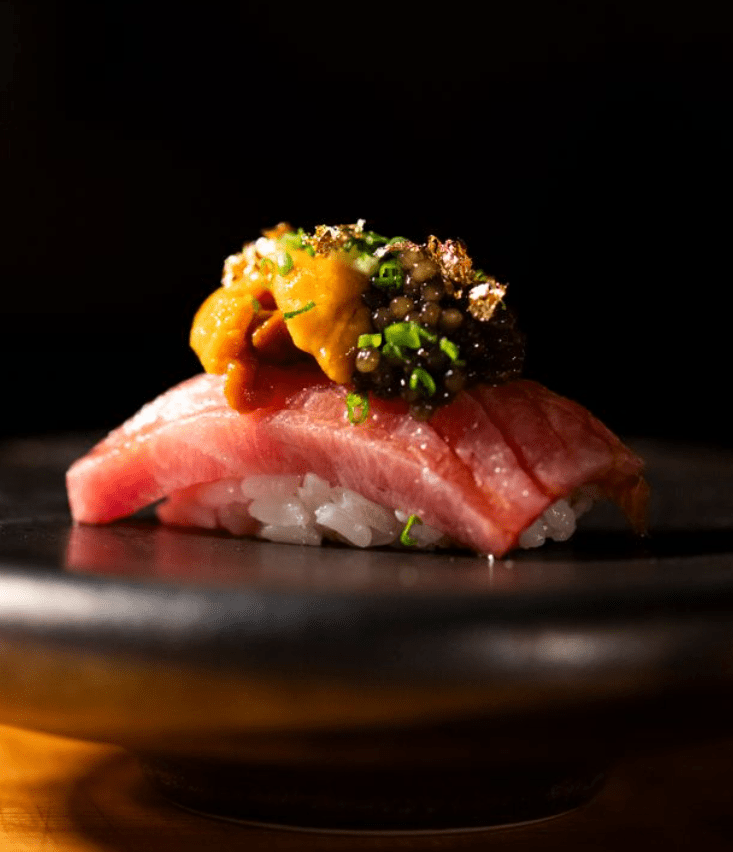
The courses run from the delicate to the indulgent. Akami, lean tuna, comes with kizami wasabi, minced finer and sharper than the usual paste. Kinmedai, golden eye snapper, is lightly seared and finished with yuzu mango compote and lime zest. Otoro, the fatty tuna, arrives draped with osetra caviar and a touch of gold leaf, and a handroll fills with king crab and Hokkaido uni. The meal closes, as it always has, with seared A5 wagyu laid with Hudson Valley foie gras.
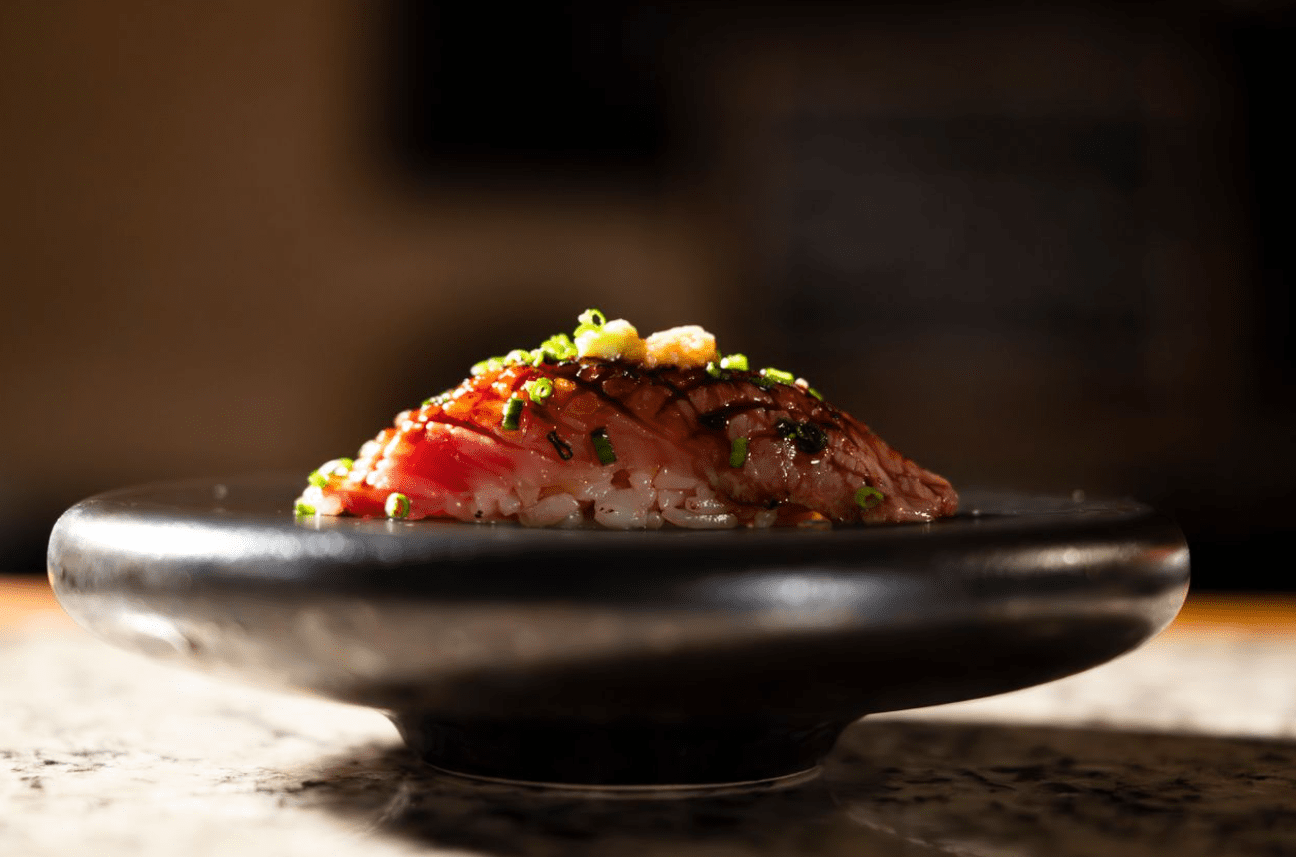
The setting is half the point. Spector describes the idea as having “the quality of Japan” with the “vibe of a New York hip hop club.” The counter is built for it: the night starts with a welcome round of sparkling wine or Japanese whiskey, the chefs talk through each course, the sake keeps coming, and the night gets louder as the omakase continues to arrive. Guests who skip the counter can settle at the surrounding tables for the à la carte menu instead.
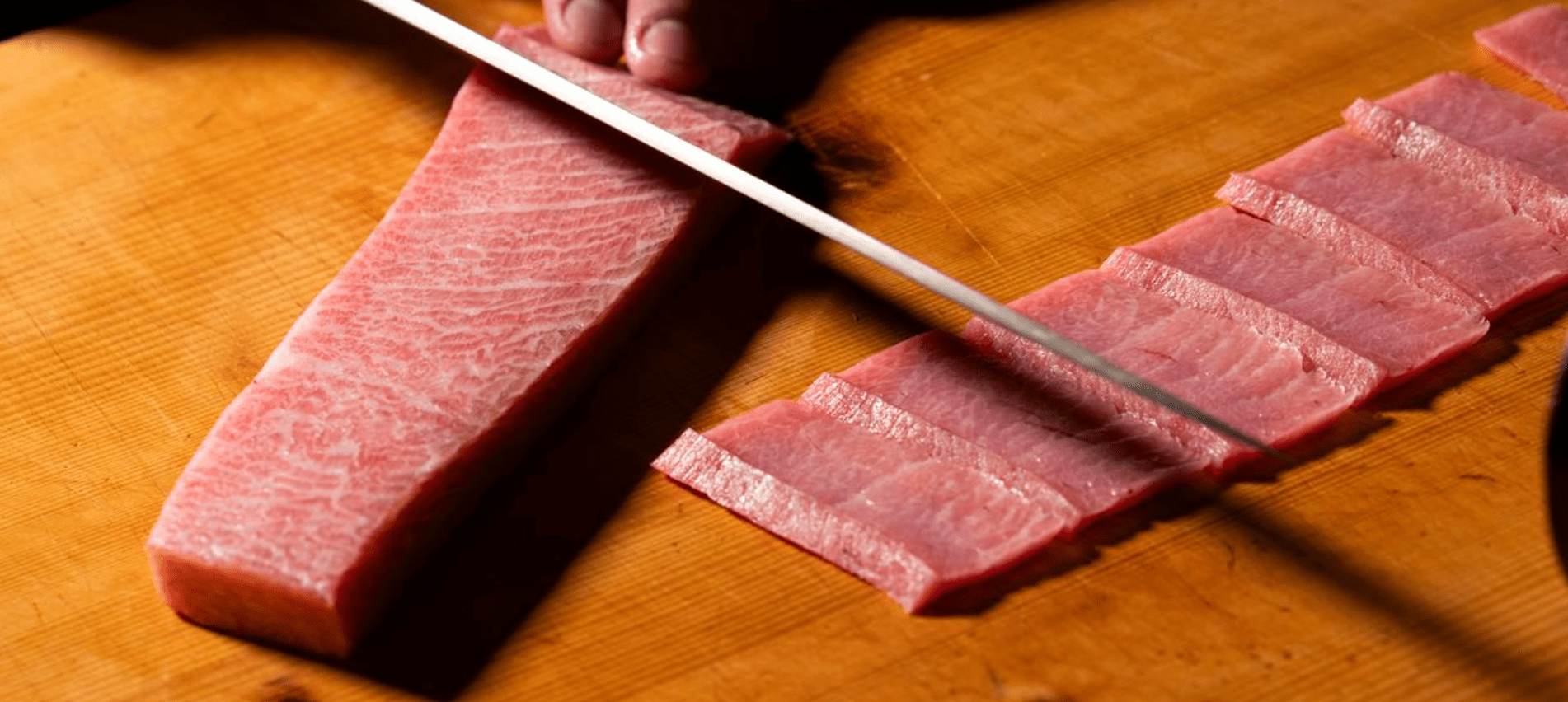
Seven residencies in, the address keeps changing and the formula hasn’t: a small counter, fish flown in from Japan, and a night that loosens up as it goes on.